June 18, 2026

Live-in Relationship in India: A Critical Socio-Legal Analysis 

Published On: June 18, 2026 Authored By: Manjiri Vaidya Government New Law College Indore Abstract Live-in relationships have become increasingly common in India, particularly among young people, owing to shifts in lifestyle and social values. Marriage occupies a central place in Indian society, yet growing numbers of couples are choosing to cohabit without entering into […]

Live-in Relationship in India: A Critical Socio-Legal Analysis  Read More »

A gavel striking a sound block, symbolizing justice and legal authority in a courtroom setting.

Selective Outrage And The Law: Why Some Jokes Lead To FIRs While Others Don’t?

Published On: June 18, 2026 Authored By: Siddhi Rajput Abstract Over the last decade, India’s stand-up comedy culture has grown into an important forum for social and political discourse. However, comedians are increasingly subjected to First Information Reports (FIRs), cancellations, and criminal investigations based on political timing and identification rather than objective legal norms. This

Selective Outrage And The Law: Why Some Jokes Lead To FIRs While Others Don’t? Read More »

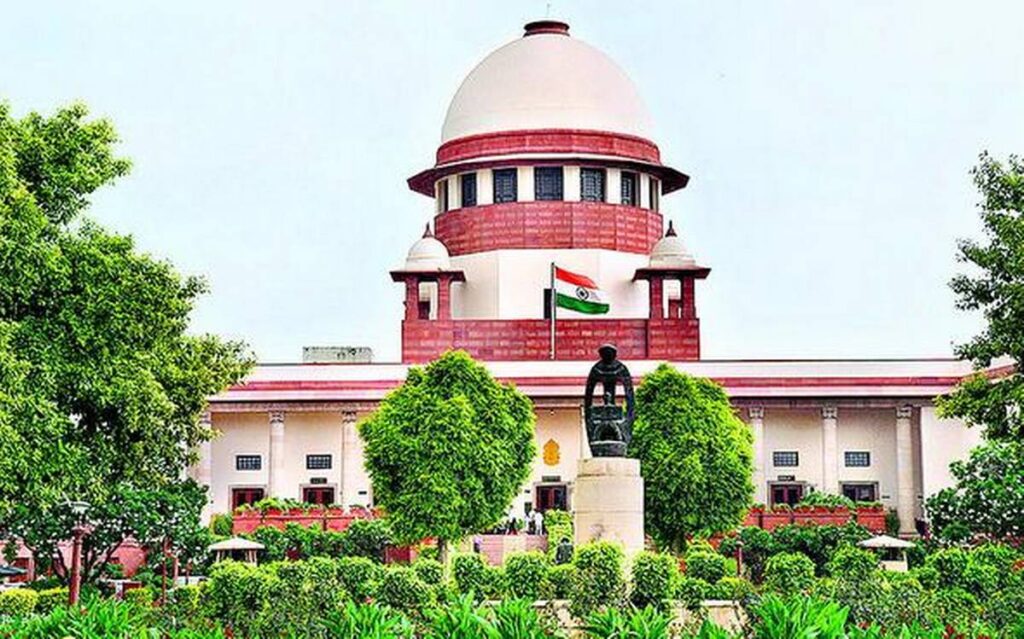
Supreme Court Bench Size Expansion: How The Ordinance Treats The Symptom Rather Than The Underlying Disease

Published On: June 18, 2026 Authored By: Sakshi Singh National Law University, Delhi Abstract The Supreme Court of India is currently facing a long-standing challenge of a growing backlog of cases, with the number recently crossing an all-time high of 93,731 pending cases. To tackle this, the executive has continuously followed a mathematics-driven approach of

Supreme Court Bench Size Expansion: How The Ordinance Treats The Symptom Rather Than The Underlying Disease Read More »

Understanding Transformative Constitutionalism in the Context of UGC Guidelines

Published On: June 18, 2026 Authored By: Akanksha Kumari ILS Law College, Pune I. Introduction The University Grants Commission (UGC) released its 2026 Promotion of Equity in Higher Education Institutions Guidelines with the dual objective of eliminating caste-based discrimination and strengthening institutional accountability across India’s higher education sector. These guidelines emerged from Supreme Court-monitored proceedings

Understanding Transformative Constitutionalism in the Context of UGC Guidelines Read More »

Scroll to Top