Published on: 23rd January 2026
Authored By: Kunwar Langer
The Law School, University of Jammu
ABSTRACT
Custodial deaths are considered to be the most violent acts against humanity. This legal article focuses on an in- depth analysis of the custodial deaths in India from with a data depicting a clear picture of systematic failure of the constitutional machinery in India. While discussing the reasons for the unprecedented rise in the number of custodial deaths in India, the article also outlines a way forward.
INTRODUCTION
As humans, we live in a society where we often ignore or try to totally avoid certain topics. But with each passing year, this ignorance and avoidance tend to become the staunch reality of the world, as if it is completely normal! One such reality is the violent nature of “Police” as the law enforcing agency of the government and part of the problem is that Bollywood has played a pivotal role in normalizing this disposition. Several reports suggest that an average Indian movie lover tends to engage with the main plot of the movie if there is any sort of police violence in it. These people also believe that police, apart from being the law enforcing agency of the government, is also responsible to wipe out the ‘villains’ from the society. But is it so? Is the police as an agency so violent that a normal man is afraid to approach it anyhow?
CUSTODIAL DEATH: MEANING AND CONSTITUTIONALITY
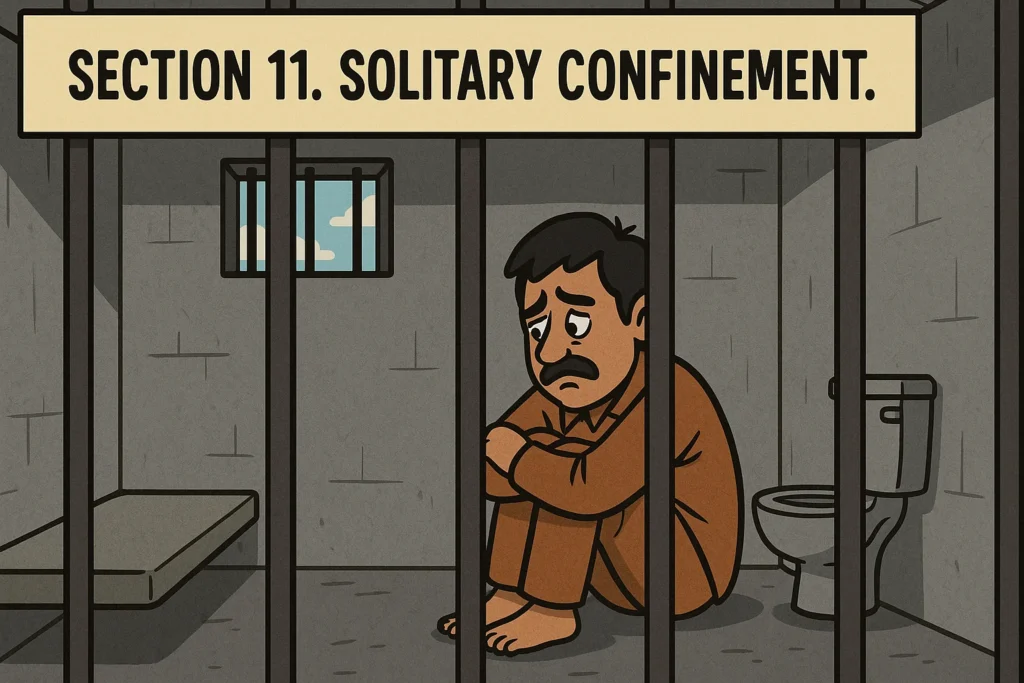
Custodial deaths are basically defined as the death of a person under the police custody or any court’s custody. Let us understand this in depth: As according to the Indian legal system, whenever a person commits a crime, the police officer arrests that individual that is accused of committing the offence and subsequently brings him to the police station. There in the police station, the officer in- charge cannot legally keep the accused under the custody for more than 24 hours, unless the accused is convicted by any court of law for the offence being. Now, when the accused is convicted of any offence the police detain the convict under their custody and if the accused or the convict dies, either with direct or indirect involvement of police, while being under the custody, it is termed as “Custodial Death”.
Custodial death can take place in two forms: Naturally, i.e., where there is no foul- play by the police; and by way of “Fake Encounters”, i.e., when there is direct involvement of police forces in the death of an accused or a convict[1]. Majority of times what happens is that, even before an arrest is made, the accused is brutally tortured by the police forces which allow the police to use the defence that the injuries were not caused due to any custodial brutality but were present even before the arrest was made. As a result of which it become very difficult to prove the ill intent of police many a time.
Custodial deaths are regarded as the most unprecedented use of force by the police, which as an institution is believed to uphold the torch of law. These acts spur a debate regarding the constitutionality of such force and brutality used by such an institution, as these acts not only infringe the fundamental rights of the individual being brutally attacked under the custody, but also demean the true meaning of natural justice, equity and good conscience.
FREQUENCY OF CUSTODIAL DEATHS IN INDIA – DATA ANALYSIS
All around the world, there are several organisations that keep a protective eye over issues revolving around unlawful torture against the citizens of a particular nation. If we take an example, India has been ranked as at a “High Risk” in the “ENDING POLICE BRUTALITY AND INSTITUTIONAL VIOLENCE” category as according to the Global Torture Index of 2025, published by World Organisation Against Torture[2]. Even though this global position is a concerning issue but what is more concerning is the fact that despite signing the United Nations Convention Against Torture in 1997, India has yet to ratify it; while neighbouring nations like Nepal, Bhutan and Bangladesh have ratified the document, despite being holistically at a compromised position globally as compared to India.
Taking a look at the domestic data, the total number of cases registered by the National Human Rights Commission (NHRC) on the basis of intimidation received about custodial deaths (Judicial, Police and Fake Encounters) particularly in the state of Uttar Pradesh during 2017 to 2018 amounts to a total of 365 deaths with Bareilly amounting to 25 custodial deaths alone[3]. The most recent data published by the NHRC in its “The annual report of 2023 – 2024” suggests that The commission received a staggering 2,346 new cases regarding death in judicial custody and on top of that 160 cases of death in police custody during the year 2023-2024[4], which in itself is very high as compared to the previous years.
As of 2025, the data regarding custodial deaths in India is not clear but still referring to several reports of the National Crime Record Bureau (NCRB) and recent trends, the projected data shows regions like Maharashtra leading the charts with a total of 19 custodial deaths, followed by Gujarat and Rajasthan with 14 and 11 deaths respectively[5]. These numbers and data show a very horrifying and a systematic failure of the custodial system which primarily was built to punish the accused or the convict for the crimes against the humanity but they themselves sometimes become the victims of custodial crimes, the real crimes against humanity.
REASONS OF CUSTODIAL DEATHS IN INDIA
Analysing the data provided above, we can surely conclude the fact that custodial deaths are on a rise in India. Now the question arises, “what are the reasons behind the use of unprecedented force by the police or any other judicial body to administer fast justice?” The answer to this question is provided below:
- Faulty Investigation Process: One of the most prominent and the leading factor that give rise to custodial deaths is the opaque investigation done by the police department. Police often tries to destroy the evidence or twist the narrative to avoid acquittal.
- Poor maintenance of Prison cells: secondly, apart from the fake encounters, custodial deaths in India also frequently occur due to the under- maintained jails, custodial homes and prisons. Lack of basic medical and hygienic facilities is a major contributor. The budget allocated for prison healthcare is often insufficient to meet the growing health needs of prisoners, leading to deficiencies in medical supplies, equipment and facilities[6].
- Marginalization of Targeted groups: Marginalization of the people from the vulnerable sections of the society and the use of brutal force by police or any other authority against them, primarily due to social hatred, is also one of the major contributors of such alarming number of custodial deaths in India. “NHRC data reveals that 71 percent of custodial deaths between 1996 and 2018 involved detainees from poor or vulnerable backgrounds”[7].– The New Indian Express
LEGAL ASPECT OF CUSTODIAL DEATHS AND REFORMS IN THE SYSTEM
The India legal system does realise the fact that custodial deaths are unconstitutional and inhumane in all aspects, but still with each passing years the number of victims dying under the police or judicial custody is increasing significantly which puts forward the paradoxical image of the system altogether. But still there is a silver lining after all in the form of several safeguards available to the accused and the convicts to protect themselves against the brutal torture by the so called “Law enforcers”. Some of such ‘Constitutional’ safeguards are:
- Article 20 (3)[8] of the Indian Constitution provides for the right against self- incrimination, i.e., it protects anyone from being a forced witness against themselves in a criminal case.
- Article 21[9] of the Indian Constitution ensures the right to life and personal liberty, prohibiting deprivation of one’s right to live his life freely except according to the rule established by the law.
- Article 22[10] of the Indian Constitution provides for protection against unlawful detention and arrests in certain circumstances.
Moreover, the recent developments and amendments in the criminal laws of the land have added to the list several new safeguards to substantially reduce the number of police or judicial brutalities in the nation. For instance:
- Section 120[11] of the Bharatiya Nyaya Sanhita, 2023 punishes intentional causing of hurt or grievous hurt to extort confessions. Similarly,
- Section 196[12] of the Bharatiya Nagarik Suraksha Sanhita, 2023 allows the Magistrate to inquire into the cause of death of the person in question.
- Section 23 (2)[13] of the Bharatiya Sakshya Adhiniyam, 2023, states that No confession shall made by any person while he is in the custody of a police-officer, unless it be made in the presence of a Magistrate.
These provisions work in limiting the power of police to forcefully record false statements of the accused or the convict.
JUDICIAL INTERVENTION AND FURTHER DEVELOPMENTS
Indian judiciary has played a very important role in keep a close check on the powers of police and other authorities. Every time a case revolving around the use of police or institutional brutality has met the judiciary, justice has been served. These cases have become precedents in the Indian legal system. Some such landmark judgements given by the Indian judiciary are:
- Nilabati Behera v. State of Orissa (1993)[14] –
The case was filed by the complainant, Nilabati Behera, after her 22 year- old son, Suman Behera, died due to police brutality while being under police custody. The question of law in this case was the accountability of the state in case of custodial deaths. As the trial unfolded, the state was held liable for the death of the young boy as the police brutality resulted in the violation of right to life and liberty (under Article 21 of the Indian Constitution) of the young soul and compensation was awarded to the victim’s family.
2. D.K. Basu v. State of West Bengal (1996)[15] –
This case revolves around a PIL that was filed by D.K. Basu, a member of Legal Aid Service of West Bengal. The PIL was filed in response to the increasing incidents of custodial deaths under the police custody. The Supreme Court treated this petition was a writ petition which led to a significant examination of the rights of the detainees, particularly under Article 21 of the Indian Constitution. As a result of which, in 1997, the Apex Court delivered a landmark judgement, emphasising on the needs for accountability and a procedural safeguard in police action. The judgement also laid down 11 guidelines to protect the rights of individuals during arrest and detentions.
3. Paramvir Singh v. Baljit Singh (2020)[16] –
In this case, the Apex Court ruled for upholding the human rights of the accused individuals and under trial prisoners under Article 21 of the Indian Constitution by mandating the installation of CCTV cameras in police stations and investigating agency offices. This makes these agencies accountable for any unprecedented force used in the premises.
4. Ajith Kumar Case (2025)[17] –
Ajith Kumar, a 27 year old temple guard from Tamil Nadu, was tortured and brutally killed by the police department of the Sivagangai district. A subsequent case was registered by the Central Bureau of Investigation (CBI) in July of 2025 under section 103 of the Bharatiya Nyaya Sanhita, 2023 which pertains to death by negligence. The Madurai Bench observed and quoted that “even a murderer would not have caused this much injury.”
OVERHAUL MEASURES
Seeing and analysing the data and cases mentioned above, we can come to a conclusion that there still is a need for institutional reforms in India to effectively reduce the ever so increasing instances of police and institutional brutality. Some of the measures are discussed below:
- Legislative changes – The first measure can be the introduction of an “Anti- Torture” legislation to curb with these cases directly and keep an active check on the investigating agencies. This includes enactment of specific laws which focus on safeguarding the interest of accused and convicted individuals from unnecessary police actions.
- Technological changes – As mentioned earlier in the Paramvir Singh v. Baljit Singh case of 2020, mandatory installation of CCTV cameras should be carries out by the assigned authorities so as to keep a record of all the activities of such investigation offices.
- 11 guidelines – Strict implementation of the “11 guidelines” laid down by the Apex Court in the K. Basu v. State of West Bengal (1996) should also be diligently applied in order to increase the accountability of such agencies.
- Special safeguard for marginalized groups – A special safeguard shall also be enacted in order to protect the interests of marginalized and vulnerable groups, who are subjected to such atrocities.
CONCLUSION
Custodial deaths, not only in India, but all around the world are referred to as the degeneration of the constitutional value of a nation. India, being a nation popularly referred to as the “mother of democracy”, has majority of its values and morals driven from the Constitution. But such unsolicited and inhumane action done by law enforcing agencies, which are generally expected to serve the people, is utterly unacceptable and a disgrace to the idea of natural justice. Addressing such issues and implementing new policy measures is the most important and crucial task of the judiciary. Measures like structural reforms, stronger legal safeguards and guidelines increases the accountability of institutions like the police and the state which tends to rejuvenate the trust of the people towards such agencies and institutions, ultimately upholding the essence of democracy.
[1] Mahawar, S. (2022, July 22). Custodial deaths – iPleaders. iPleaders. https://blog.ipleaders.in/custodial-deaths/
[2] People’s Watch, “GLOBAL TORTURE INDEX 2025: INDIA FACTSHEET” (2025) https://www.omct.org/site-resources/files/factsheets/Factsheet-India.2025.pdf
[3] Ministry of Home Affairs, “Number of Cases registered by NHRC on the basis of intimation received about Custodial Death (Judicial), Custodial Death (Police) and Alleged Fake Encounters (Police) in the State of Uttar Pradesh during 2017 to 2018” https://www.data.gov.in/resource/8223fa1f-af57-4228-8a68-d10a1fd47894
[4] National Human Rights Commission, “Annual Report 2023-24” (National Human Rights Commission 2024)
(Ref. Page No. 66) https://nhrc.nic.in/sites/default/files/AR_2023-2024_EN.pdf
[5] Sutariya D, “State-Wise Custodial Deaths in India in 2025” (India Data Map, November 3, 2025) https://indiadatamap.com/2025/10/08/state-wise-custodial-deaths-in-india-in-2025/
[6] Sarojbala, Y., & Singh, R. A. (2025). Right to healthcare for prisoners in India. INTERNATIONAL JOURNAL OF HUMAN RIGHTS LAW REVIEW, 4(3), 881–888. https://humanrightlawreview.in/wp-content/uploads/2025/06/Right-to-Healthcare-for-Prisoners-in-India.pdf
[7] Sutariya D, “State-Wise Custodial Deaths in India in 2025” (India Data Map, November 3, 2025) https://indiadatamap.com/2025/10/08/state-wise-custodial-deaths-in-india-in-2025/
[8] INDIA CONST. art. 20.
[9] INDIA CONST. art. 21.
[10] INDIA CONST. art. 22.
[11] Bharatiya Nyaya Sanhita 2023
[12] Bharatiya Nagarik Suraksha Sanhita 2023
[13] Bharatiya Sakshya Adhiniyam 2023
[14] Nilabati Behera v. State of Orissa (1993) 2 SCC 746
[15] D.K. Basu vs. State of West Bengal, (1997) 1 SCC 416; AIR 1997 SC 610
[16] Paramvir Singh Saini v. Baljit Singh, Crim. App. J. (S.L.P.) No. 3543 of 2020
[17] Desk, T. C. (2025, July 12). Tamil Nadu custodial death: CBI to probe Ajith Kumar case; postmortem showed 44 injuries, internal bleeding. The Times of India. https://timesofindia.indiatimes.com/city/chennai/tamil-nadu-custodial-death-cbi-to-probe-ajith-kumar-case-postmortem-showed-44-injuries-internal-bleeding/articleshow/122402748.cms