Published on: 21st April 2026
Authored by: Akshaya S
TNNLU, Trichy
Citation: Civil Appeal No. 2025; (Arising out of S.L.P.(C) No. 4818 of 2023)
Court: Supreme Court
Date of judgement: 9th December 2025
Bench: Justice Rajesh Bindal and Justice Manmohan
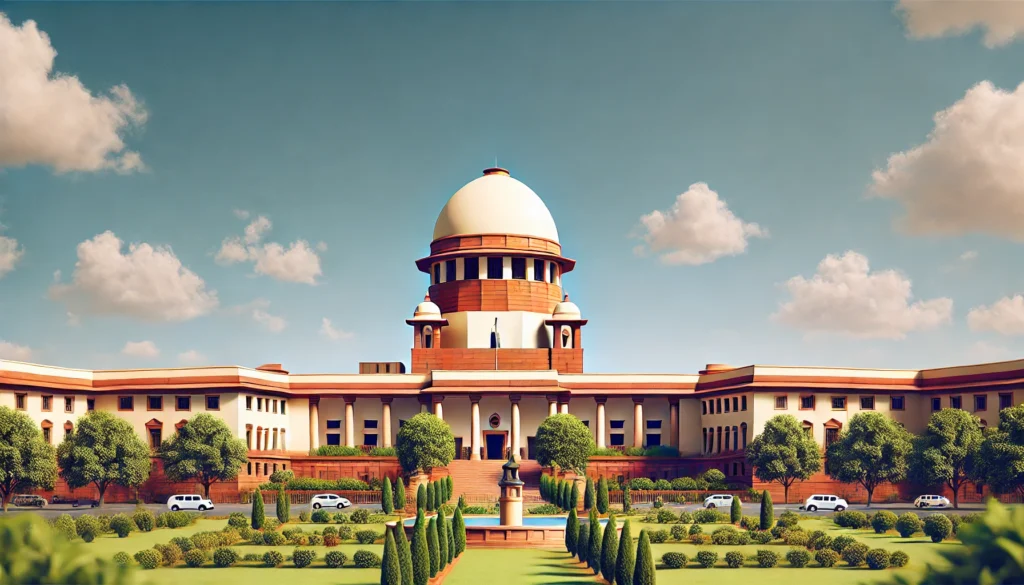
Overview: The Supreme Court of India delivered a vital ruling in the case of Ashok Kumar Dabas (Dead) v. Delhi Transport Corporation which defines the pension rights of employees who resign from their employment. The case lies in the interpretation of Rule 26 of the Central Civil Services (Pension) Rules 1972 which establishes the pension rights of employees after retirement of their jobs.
Facts of the case:
Ashok Kumar Dabas was a conductor in the Delhi Transport Corporation (DTC) in 1985. He selected the DTC pension scheme, which the company established during his employment in 1992[1]. He has worked for the organization for over 29 years. Ashok Kumar Dabas resigned his job in 2014 He has worked for the organization for over 29 years.
Ashok Kumar Dabas resigned his job in 2014 due to personal matters. After his resignation, the employment relationship between both parties were ended. After resigning his job, he requested his retirement benefits, which included pension, gratuity and provident fund and leave encashment. The Delhi Transport Corporation processed his request and provided him some benefits and including his provident fund. The company denied him both pension and gratuity entitlements. The denial occurred because Rule 26 of the Central Civil Services (Pension) Rules 1972[2] which states that any employee who resigns from their position loses all their previous work experience except for particular situations which are defined as exceptions. The employer stated that all service time ended when the employee left the organization which meant that the employee lost all rights to receive pension benefits.
Ahok Kumar Dabas filed a complaint with the Central Administrative Tribunal (CAT) after his request for benefits got denied. He argued that employees who resign after such an extended period of service should not lose all their pension rights. which upheld the Tribunal’s order and confirmed that the applicable rules state that resignation results in the loss of all previous work experience. The legal heirs of Ashok Kumar Dabas continued the proceedings after his death.
The Supreme Court of India heard the case which involved a dispute about how to interpret Rule 26 of the CCS[3] Pension Rules and whether a resigning employee had the right to pension and other benefits.
Issues
1. Effect of Resignation on Pensionary Benefits
Whether resignation from service, in contrast to retirement or voluntary retirement under designated programs, leads to the automatic forfeiture of pension benefits under the Delhi Transport Corporation’s pension plan. The Court was tasked with interpreting the contractual requirements of the pension system to determine whether resignation forfeits pension entitlements regardless of the duration of service performed.
2. Statutory Nature of Gratuity
Whether a gratuity, under the Payment of Gratuity Act, 1972[4], can be withdrawn if the employee resigns before the retirement. The Court need to determine whether resignation serves as a legitimate basis for the forfeiture of gratuity, or if gratuity remains due after the fulfillment of the qualifying service time, irrespective of the way on which employment is terminated. The Court had the duty to evaluate the pension scheme’s contractual conditions and determine whether resignation voids pension benefits regardless of the duration of service rendered.
3. Entitlement of Legal Heirs
Can the legal heirs of an employee who resigned prior to retirement claim a pension and gratuity upon the person’s death?
The case required an analysis of retirement benefits transmission rights which needed to clarify the distinction between contractual pension rights and statutory gratuity rights.
Arguments of both parties
Petitioner’s argument:
The petitioners argued that the pension and gratuity are benefits earned through extended years of service. They argued that resignation should not invalidate such benefits, including gratuity[5], which is a lega right under the Payment of Gratuity Act, 1972. They claimed that the refusal of such benefits would be disproportionate and in contradiction with the principle of justice and social welfare.
Respondent’s argument:
DTC denied the claim by stating that the company’s pension scheme explicitly specifies that resignation leads to the forfeiture of pension benefits. They argued that resignation implies a voluntary termination of the employer-employee relationship, thereby rendering the employee ineligible for retirement benefits. Thus, the employee is not eligible for pension benefits. DTC did acknowledge that gratuities could remain payable in compliance with legal standards.
Judgment:
The Supreme Court affirmed that under the DTC pension plan, pensionary benefits are forfeited upon resignation from employment. The Court highlighted that resignation is a legitimate basis for forfeiture under such plans and that pensions are contractual benefits subject to the conditions of the particular pension plan. Nonetheless, the Court differentiated clearly between a gratuity and a pension. The Payment of Gratuity Act of 1972 established the right to gratuity[6], which cannot be withheld just because an employee has resigned the job. The Court decided that Ashok Kumar Dabas’s legal heirs were entitled to a gratuity and other statutory obligations but not a pension.
Ratio decidendi:
Resignation from employment leads to the forfeiture of pensionary benefits under contractual pension schemes, though it has no evidentiary impact on the statutory entitlement to a gratuity under the Payment of Gratuity Act, 1972[7].
Critical analysis:
The clear distinction between contractual and statutory retirement benefits was significantly upheld by the ruling in Ashok Kumar Dabas v. DTC[8]. The Supreme Court has reaffirmed a notion that contractual agreements cannot supersede statutory benefits by maintaining the forfeiture of pension upon resignation while, also safeguarding the right to gratuity. The decision in Union of India v. Rakesh Kumar[9], which emphasized the inviolable nature of statutory benefits like gratuity, aligns with previous decisions.
The court establishes doctrinal clarity through its reasoning which separates pension benefits from gratuity payments. The entitlement to pension benefits arises from a particular scheme which contains defined requirements that must be met. Gratuity functions as a statutory entitlement that employees earn after they complete their required service period which continues until their employment ends except when they face termination for particular misconduct reasons.
From a policy perspective, the ruling balances the employee’s entitlement to statutory protection with the employer’s ability to enforce contractual agreements. It makes it very evident to public sector organisations that they cannot contract out of their statutory agreements, while they might establish pension plans with certain eligibility requirements.
The ruling extends to the legal heirs of employees who resign before to retirement. While it limits their entitlement to pension benefits, it provides for gratuity, thus reinforcing the social security aims of labour welfare policy. The Court’s approach proves to be both reasonable and legally sound because it upholds existing legislative protections while allowing parties to determine their own contractual relationships. The case demonstrates that public sector organizations need to establish consistent pension systems that ensure that all employees become accountable for their work. Legislation needs to establish retirement benefits as standard practice because politicians and policymakers tend to exclude people who leave their jobs after long year of service. educational programs about how resignation affects retirement benefits will help employees understand their choices better.
Conclusion:
The Supreme Court’s ruling in Ashok Kumar Dabas v. Delhi Transport Corporation provides a detailed viewpoint of the legal implications of resignation on retirement benefits. The Court has upheld the validity of the Payment of Gratuity Act, 1972, by distinguishing the contractual and statutory benefits while recognizing the obligatory nature of pension schemes. The ruling thus establishes that the statutory rights remain protected despite any contractual limitations and sets a legal standard for resolving future disputes over resignation and retirement payments.
[1] Delhi Transport Corporation Pension Scheme, 1992
[2] Central Civil Services (Pension) Rules, 1972, Rule 26(1).
[3] Central Civil Services (Pension) Rules, 1972, Rule 26(1).
[4] Payment of Gratuity Act, 1972, No. 39 of 1972, § 4 (India).
[5] Id. § 4
[6] Payment of Gratuity Act, 1972, § 4
[7] (supra) Payment of Gratuity Act, 1972
[8] Ashok Kumar Dabas (Dead) v. Delhi Transport Corporation, Civil Appeal No. 2025 (India).
[9] Union of India v. Rakesh Kumar, (2001) 4 SCC 309 (India).