Published on: 26th November 2025
Authored by: Anoop Kumar
University of Lucknow
Case Title: Olga Tellis v Bombay Municipal Corporation (1985) 3 SCC 545.
Citation: AIR 1986 SC 180, (1985) 3 SCC 545.
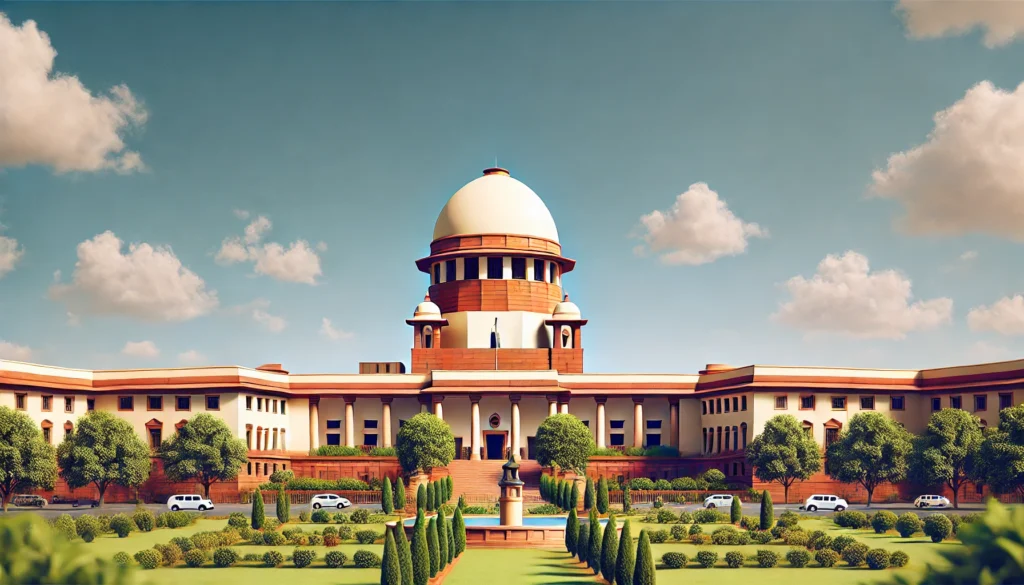
Court: Supreme Court of India.
Bench: YV Chandrachud CJI, AM Ahmadi, MP Thakkar, DN Bhagwati, and VV Muralidharan JJ.
Date of Judgment: 10 July 1985.
Relevant Statutes/Key Provisions
- Constitution of India, Articles 21 (Right to Life and Personal Liberty), 19(1)(e) (Right to Reside and Settle), 19(1)(g) (Right to Practice Any Profession or Occupation), and 32 (Right to Constitutional Remedies).
- Bombay Municipal Corporation Act 1888, Section 314 (Power to Remove Encroachments on Public Land).
Brief Facts
In the early 1980s, the city of Bombay (now Mumbai) faced a growing challenge with pavement and slum dwellers, people who lived in makeshift homes on public footpaths and in informal settlements. These individuals, often daily-wage workers like laborers, vendors, and domestic helpers, had migrated to the city seeking better economic opportunities. With no access to affordable housing, they set up temporary shelters on pavements and vacant public lands. In 1981, the Bombay Municipal Corporation (BMC), under the authority of Section 314 of the Bombay Municipal Corporation Act 1888, began demolishing these dwellings, claiming they were illegal encroachments that obstructed public spaces and posed hygiene and safety risks.
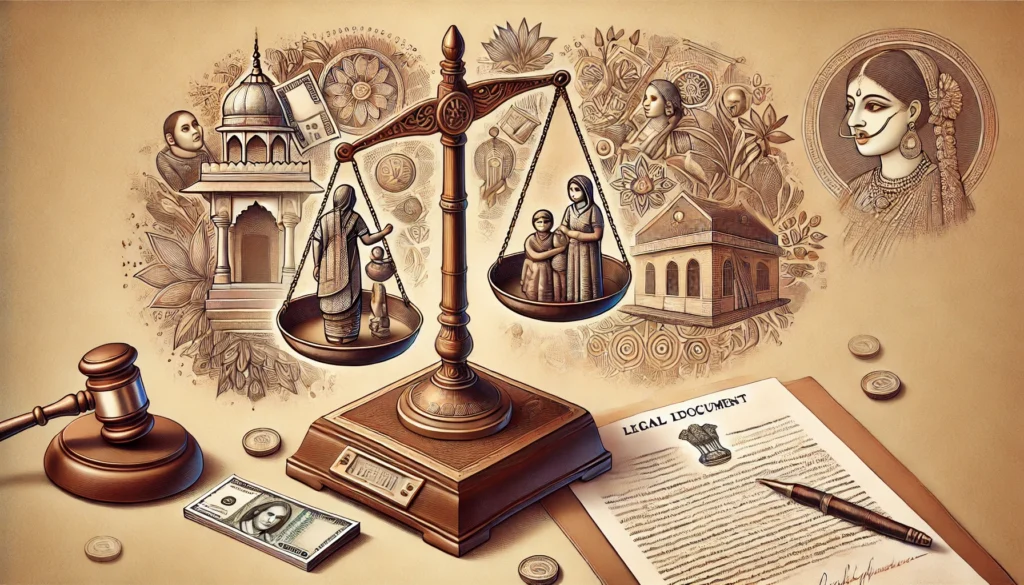
Olga Tellis, a journalist, along with other petitioners including pavement dwellers and representatives of slum communities, filed a public interest litigation in the Supreme Court of India. They argued that the BMC’s actions were not just about clearing public land but were threatening the very survival of these vulnerable people. The petitioners, representing around 50,000 pavement and slum dwellers, said that their homes—however modest—were their only shelter, and their proximity to workplaces was critical for their livelihoods. Evicting them without notice or alternative accommodation would strip them of their ability to earn a living and live with dignity.
The case was brought under Article 32 of the Constitution, which allows citizens to approach the Supreme Court directly for the enforcement of fundamental rights. The petitioners claimed that the evictions violated their rights under Article 21 (right to life and personal liberty), Article 19(1)(e) (right to reside and settle anywhere in India), and Article 19(1)(g) (right to practice any profession or occupation). They asked the Court to stop the demolitions and to direct the government to provide alternative housing solutions.
Issues Involved
The Supreme Court had to tackle several critical legal questions:
- Does the right to life under Article 21 include the right to earn a livelihood, especially for people whose survival depends on it?
- Do the BMC’s eviction actions under Section 314 of the Bombay Municipal Corporation Act 1888 violate the fundamental rights guaranteed by Articles 21, 19(1)(e), and 19(1)(g)?
- Is Section 314, which allows evictions without prior notice, fair and reasonable, or does it go against the principles of natural justice?
- How can the state balance the rights of pavement dwellers with the need to keep public spaces clear and maintain urban order?
Arguments
Petitioners’ Arguments
The petitioners made a heartfelt case, emphasizing the human cost of the evictions:
- Right to Life Includes Livelihood: They argued that for the pavement dwellers, living close to their workplaces was not a choice but a necessity. Most were daily-wage workers who could not afford to travel long distances. Evicting them would take away their ability to earn a living, effectively denying them the right to life under Article 21. Life, they said, is more than just breathing—it means having the means to survive with dignity.
- Violation of Other Rights: The evictions also infringed on their right to reside in Bombay (Article 19(1)(e)) and their right to work (Article 19(1)(g)). Forcing them out of the city would cut them off from their only source of income.
- Unfair Procedure: Section 314 allowed the BMC to demolish homes without giving notice or a chance to be heard. The petitioners called this arbitrary and unfair, arguing that even the poorest citizens deserve a say before their lives are upended.
- Poverty, Not Choice: The dwellers weren’t squatting on public land out of defiance. Poverty and the lack of affordable housing left them no other option. The petitioners urged the state to provide alternative accommodation before evicting them, recognizing their dire circumstances.
Respondents’ Arguments
The BMC and the State of Maharashtra defended the evictions, focusing on public interest:
- Illegal Encroachments: The pavement dwellers were occupying public land illegally. Section 314 gave the BMC the legal authority to clear these encroachments to ensure public spaces remained accessible and safe for everyone.
- No Right to Pavements: The respondents argued that Article 21 does not guarantee a right to live on public pavements. Allowing such encroachments would disrupt urban planning and encourage more illegal settlements.
- Practical Challenges: Providing alternative housing for thousands of dwellers was not feasible. The state argued that doing so would set a precedent that could overwhelm municipal resources and lead to more encroachments.
- Public Interest: The BMC emphasized that pavements are for pedestrians, not homes. The encroachments caused congestion, health hazards, and safety issues, justifying the need for evictions.
Judgment
The Supreme Court’s judgment, delivered on 10 July 1985, was a landmark decision that reshaped the understanding of fundamental rights in India. Here’s what the Court decided:
- Right to Life Includes Livelihood: The Court ruled that the right to life under Article 21 is not just about physical survival but includes the right to live with dignity, which encompasses the right to earn a livelihood. For the pavement dwellers, their homes on the pavements were directly tied to their ability to work. Evicting them without alternatives would strip them of both shelter and income, violating Article 21.
- Fair Procedure Required: The Court found that any action affecting someone’s life or liberty must follow a procedure that is just, fair, and reasonable. While Section 314 was legally valid, its application could not be arbitrary. The Court directed that evictions must include prior notice and an opportunity for the dwellers to make their case, aligning with the principles of natural justice.
- Balancing Rights and Responsibilities: The Court recognized the BMC’s duty to keep public spaces clear but stressed that this could not come at the cost of human dignity. The justices noted that the dwellers were not criminals but victims of poverty and systemic failures in urban housing. The state, therefore, had a responsibility to address these deeper issues.
- Practical Directives: To ensure humane treatment, the Court issued specific guidelines:
- Evictions could not take place during the monsoon season, when dwellers would be most vulnerable.
- The BMC had to give at least one month’s notice before any eviction.
- The state was encouraged to provide alternative sites or accommodation, especially for dwellers who had been in Bombay since the 1961 census.
- The Court allowed evictions to proceed but only under these conditions, ensuring a balance between public order and individual rights.
The Court did not declare Section 314 unconstitutional but interpreted it in a way that protected the dwellers’ rights while allowing the BMC to fulfil its duties.
Ratio Decidendi
The core legal principle of the case is that the right to life under Article 21 includes the right to livelihood, as taking away someone’s means of survival negates their right to live with dignity. Additionally, any state action that impacts life or liberty must follow a fair and reasonable procedure, including notice and an opportunity to be heard, in line with natural justice.
Obiter Dicta
The Court made several important observations that, while not legally binding, shaped future discussions:
- The state has a constitutional duty to address urban poverty and provide affordable housing. Evictions alone cannot solve the problem of encroachments, which stem from systemic issues like migration and lack of housing.
- Article 21 is a dynamic right that must evolve to meet society’s changing needs. The Court hinted that the judiciary would continue to interpret this article broadly to protect marginalized communities.
- The justices expressed sympathy for the pavement dwellers, noting that their situation was a result of economic compulsion, not a desire to break the law. This humanized the issue and called for compassionate governance.
Final Decision
The Supreme Court upheld the pavement dwellers’ rights under Article 21, ruling that their eviction without notice or alternatives violated their right to life and livelihood. While the Court did not stop the BMC from carrying out evictions, it imposed strict conditions to ensure they were done humanely. Section 314 of the Bombay Municipal Corporation Act 1888 remained valid, but its application had to comply with constitutional protections. The petitioners’ plea for alternative accommodation was not fully granted, but the Court’s directives pushed the state to consider such measures.
Impact and Significance
The Olga Tellis case is a milestone in Indian constitutional law, often cited for its expansive interpretation of Article 21. By linking the right to life with the right to livelihood, the Court recognized that fundamental rights are meaningless without addressing basic human needs like shelter and income. This ruling built on earlier cases like Maneka Gandhi v Union of India (AIR 1978 SC 597), which introduced the concept of due process, and paved the way for later decisions like Chameli Singh v State of UP ((1996) 2 SCC 549), which further emphasized the right to shelter.
The judgment had a profound impact on how evictions are conducted in India. It set a precedent that authorities must act with fairness, giving affected communities notice and a chance to respond. The Court’s directives also sparked debates about urban poverty and the state’s role in providing housing, influencing policies like slum rehabilitation schemes and the Pradhan Mantri Awas Yojana (Urban).
Beyond its legal impact, the case highlighted the judiciary’s role as a protector of marginalized groups. It showed that the Supreme Court could balance competing interests—individual rights versus public order—while pushing for systemic change. However, the ruling also revealed the limits of judicial power, as the Court could not mandate comprehensive housing solutions due to practical and resource constraints.
The case remains relevant today, as Indian cities continue to grapple with informal settlements and urban migration. It serves as a reminder that constitutional rights extend to the poorest citizens and that governance must address the root causes of poverty, not just its symptoms.
References
- Olga Tellis v Bombay Municipal Corporation, AIR 1986 SC 180.
- Constitution of India, arts 21, 19(1)(e), 19(1)(g), 32.
- Bombay Municipal Corporation Act 1888, s 314.
- Maneka Gandhi v Union of India, AIR 1978 SC 597.
- Chameli Singh v State of UP, (1996) 2 SCC 549.
- Kesavananda Bharati v State of Kerala, AIR 1973 SC 1461.
- PUCL v Union of India, (2001) 5 SCC 294.