Published on: 04th March 2026
Authored By Muskan Ali
IIMT College of Laws, Greater Noida
INTRODUCTION
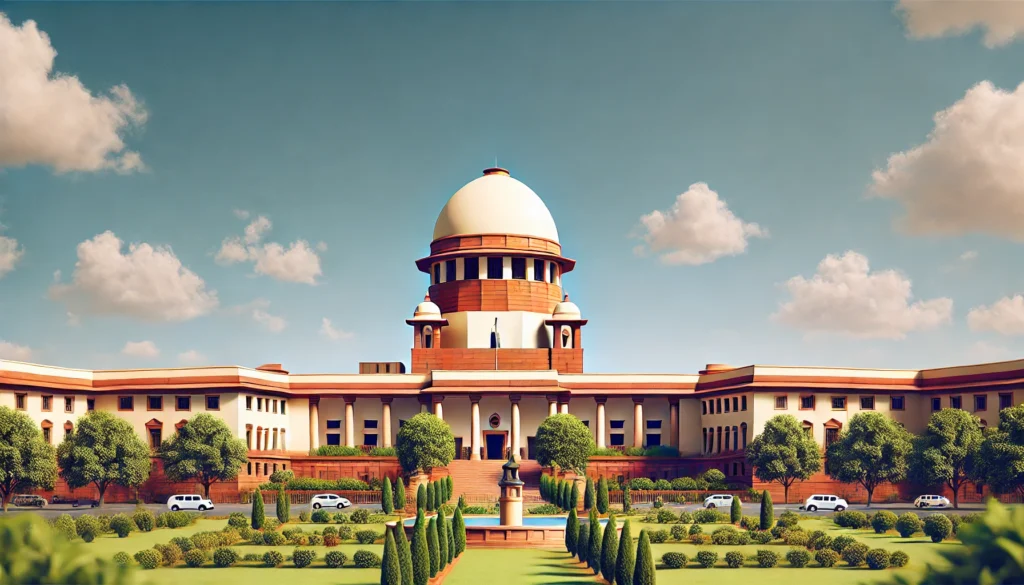
The Indian judiciary relies on the Indian Constitution and interprets it in such ways so that justice can be delivered even if there are gaps. One such interpretation was done by the Supreme Court of India on 30th January 2026, in case of Dr. Jaya Thakur v. Government of India and Ors.[1]
Menstruation is a natural biological process, but still surrounded by stigma and negligence and is considered as a taboo. Menstruating females face challenges in their daily life, at their homes and outside too. At home, separated from religious places, some even not allowed to enter kitchen and made to sleep on floors, etc. At school, due to lack of menstrual products and clean water, they face complications and concerns related to menstrual hygiene. Some avoid schools during menstrual days while some drop out of school. The attitude and behaviors of people contribute to gender specific injustice, gender inequality and violation of dignity and bodily autonomy. These challenges didn’t stop even after schemes, introduced by the Union and State government, as the implementation of these schemes was questionable in itself.
A writ petition was filed by Dr. Jaya Thakur, as social activist, highlighting the issue before the Supreme Court of India and demanded that right to menstrual hygiene must be considered as a Fundamental Right so that responsible ones can be held liable if it gets infringed. The case fills gaps between the genders and promotes health, justice and growth of fundamental rights in India.
Keywords- Menstrual Health and Hygiene, Social Stigma, Article 21, Right to dignified life, Gender specific Injustice.
BACKGROUND
Menstruation, a natural process, becomes a social issue when considered as a social stigma and this societal attitude towards menstruation gave background to this case.
Initially the topic was private and not public, but when these private matters gradually become a social taboo and resulted in denying opportunities to menstruating individuals, these restraints become barriers. Menstruating females were restricted movements, education, treated differently by separating them from religious spaces, usually in rural and marginalized communities, and availability and affordability of sanitary napkins or pads remained at question.
Central sponsored Menstrual Hygiene Scheme focuses on distribution of sanitary pads and campaign to awareness, targeting schools and Anganwadi centers but due administrative failure, this scheme was futile.
Dr. Jaya Thakur, the Petitioner, highlighted connection of menstrual hygiene to Article 21, aspect of Right to Health and failure caused violation of guaranteed right under Article 14, 21 and 47 of the Constitution. The Petitioner insisted that issue was about welfare but also connected with the constitutional accountability.
FACTS OF THE CASE
A Writ Petition was filed in the Supreme Court, by Dr. Jaya Thakur, under Article 32 of Constitution challenging failure of state to safeguard Right to health insured under Article 21, violating the Fundamental Right of adolescent girls.
Respondent was Government of India, including Ministries of Health and Family Welfare, Education and Jal Shakti, along with the State Government and Union Territories.
Petitioner raised questions on absence of proper menstrual hygiene facilities in schools, including availability of free pads, separate toilets for girls and campaigns and workshops for spreading awareness about mental health and hygiene. The petitioner claimed that due to these misfunctioning and infrastructural gaps, girls are forced to drop out of school or they prefer to stay at home during menstruation, contributing to mental stress and low morale. The Petitioner argued about infringement of rights, given in the Constitution of India, which includes-
- Right to access to education.
- Right to equality.
- Right to life and personal liberty
- Equal opportunity right
Respondent highlighted some active schemes, including Menstrual Hygiene Scheme under National Health Mission, distribution of sanitary products through Jan Aushadhi Kendra and development of infrastructure through Samagra Shiksha Abhyan. Various State reports and affidavits were submitted by State and Union territories, but all showed lack of uniform national policies on menstrual hygiene.
The Supreme Court had to decide whether there was an infringement of rights on part of government.
LEGAL PROVISIONS AND FRAMEWORK
Legal framework revolves around the Constitutional provisions which are interpreted to expand meanings to ensure justice delivery. The important provisions which are at center of argument are Article 14, 21 and 47.
Article 14 guarantees Right to Equality, even in education, which requires removal of impediments that obstructs its enjoyment. In this case, menstrual hygiene is what create an obstacle that includes absence of menstrual products, improper disposal mechanism and unavailability of toilets for females.
Article 21 grants Right to Life and Personal Liberty which includes Right to live with dignity, decided in the case of Francis Coralie Mullin v. Administrator, Union Territory of Delhi[2], Right to Privacy, interpreted in case of Justice K.S. Puttaswamy (retd.) v. Union of India[3], which is important to ensure recognition of dignity and protection of life and liberty, Right to Menstrual Health as it is included to Right to Health and it is a facet of Right to Life.
Article 21A made compulsory education a Fundamental Right and if the lack of menstrual health and hygiene neglected among girls their rights in infant and it will be the violation of Article 21A.
Article 47 directs State to prioritize the public health by raising nutrition level and standard of living of people. It includes the improvement of public health and the initiatives adopted by the State to ensure such rights and failure in doing so will make the state responsible for infringing the rights of its people.
ISSUES INVOLVED
The issues involved before the Supreme Court are: –
- Does Article 21 include Right to Dignified Menstrual Health?
- Can Article 14 gets violated with unavailability of toilets and non-access to menstrual products?
- Whether unavailability of toilet for females, unavailability and access to menstrual products and non-availability to proper disposal mechanism leads to violation of Article 21A which guarantees right to education?
PROCEEDINGS AND DECISIONS
The petition was responded with the submission of affidavits before the Supreme Court, by the Union and State Government, which holds information about existing schemes related to menstrual hygiene. While examining, the Court noted the absences of uniformity and legal accountability, along with improper monitoring, and that’s when the court realized the importance of constitutional recognition.
This state held that menstrual hygiene is an essential part of Right to dignified Life under Article 21. The absence of menstrual hygiene products and initiatives by the State widens the gap between genders, which leads to gender inequality and social injustice.
The court ordered the State and Union Territories to-
- Ensure the availability of menstrual hygiene products in private and government schools, along with clean and functional toilets for females and water facilities.
- Ensure the availability of biodegradable sanitary pads within toilets of the school.
- Ensures that there will be an effective menstrual hygiene management system in schools and provides spare uniforms and other essential materials for menstrual emergencies.
ANALYSIS OF OUTCOME
The judgment has brought menstrual hygiene under the ambit of Article 21. By this it can be evident that for giving some rights, constitutional recognition is must, along with the initiatives of the Union and State government. This also helps to impose legal accountability if the state fails to perform its duty.
IMPACT AND SIGNIFICANCE
The judgment will have impact on society as it brings gender justice and contributes in the development of Health Justice Jurisprudence. The right to dignified life and equality was at sake due to the society’s attitude towards menstruating women and menstruation as it is treated as a social stigma.
CONCLUSION
The judgment given in Dr. Jaya Thakur v. Government of India and Ors.[4] is a landmark judgment as it widens the scope of Article 21 by declaring menstrual hygiene as a Fundamental Right. This decision was a step towards the promotion of gender equality by eliminating the gender specific social injustice, and also contributes in promotion of health. This highlights idea of evolution of social realities.
This decision highlights contribution of Indian judiciary in addressing the socio-economic inequalities rooted in society which are mainly because of social stigma towards menstruating women. These social stigmas create hindrance for women to grab better opportunities and becomes a reason for lack of menstrual hygiene, unavailability of toilet and disposable mechanism.
The decision did justice by changing the societal approach and by declaring that menstrual health is not just a women’s issue and it should be discussed openly in schools with boys and girls both.
REFERENCES
- Jaya Thakur v. Government of India and Ors., 2026 INSC 97.
- The Constitution of India.
- Francis Coralie Mullin v. Administrator, Union Territory of Delhi, (1981) 1 SCC 668 (India).
- Justice K.S. Puttaswamy (retd.) v. Union of India, (2017) 10 SCC 1 (India).
[1] 2026 INSC 97.
[2] (1981) 1 SCC 668 (India).
[3] (2017) 10 SCC 1 (India).
[4] 2026 INSC 97.