

Facial Recognition

the legal quorum

FACIAL RECOGNITION TECHNOLOGY AND THE RIGHT TO PRIVACY IN INDIA: NAVIGATING THE LEGAL AND ETHICAL CROSSROADS

Published On: September 30th 2025 Authored By: Priyanshu Singh Amity University, Noida Abstract Facial Recognition Technology (FRT) is being used more and more in India like in airports, police work, and even shopping malls. While it can make things faster and help in catching criminals, it can also harm our privacy if not used carefully. […]

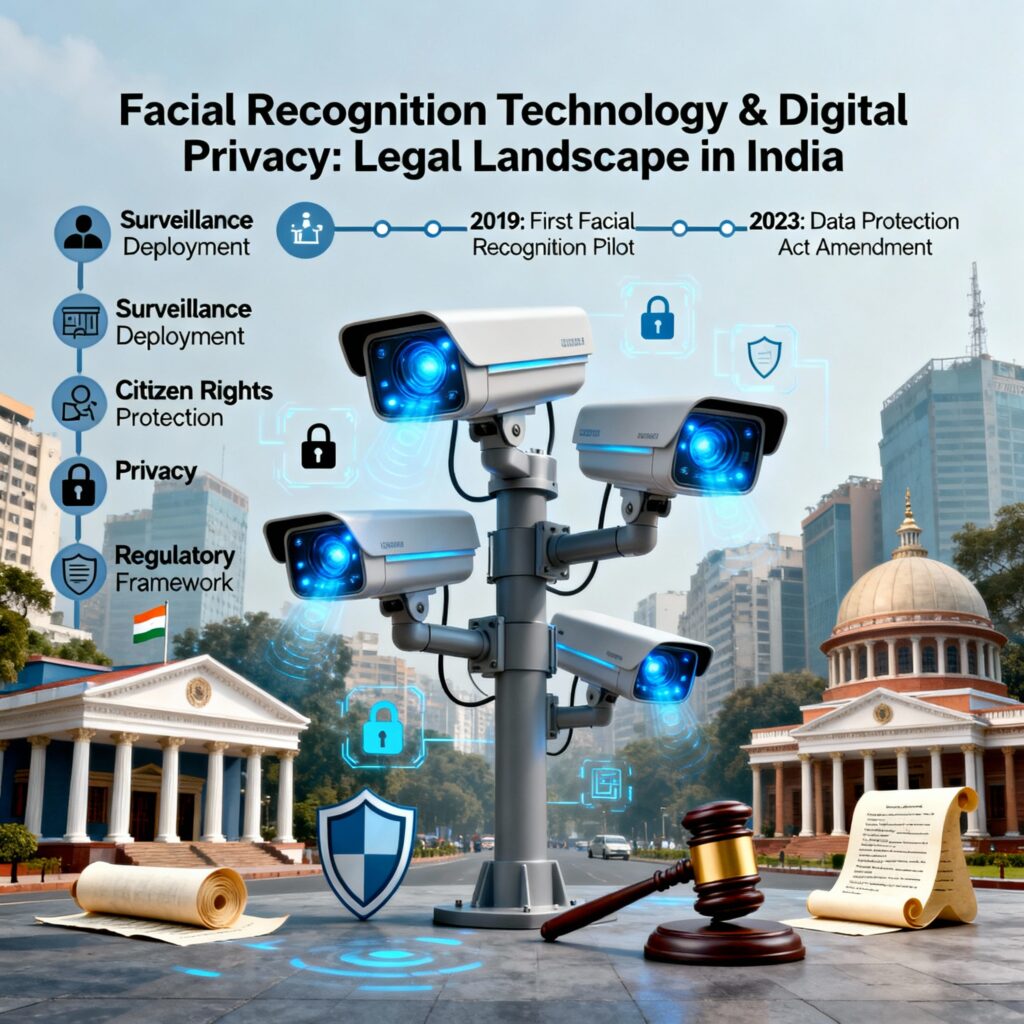
FACIAL RECOGNITION TECHNOLOGY AND THE RIGHT TO PRIVACY IN INDIA: NAVIGATING THE LEGAL AND ETHICAL CROSSROADS Read More »

Facial Recognition and the Right to Privacy: Legal and Ethical Concerns in India

Published On: September 30th 2025 Authored By: Samruddhi Pawar ILS law college Introduction: Consider walking through a railway station while looking at a camera. Your face is being captured and scanned without your awareness. This is no longer a science fiction story: it is a current reality in India. The adoption of Facial Recognition Technology

Facial Recognition and the Right to Privacy: Legal and Ethical Concerns in India Read More »

Facial Recognition and the Right to Privacy: Legal and Ethical Concerns in India

Published On: September 30th 2025 Authored By: Heena Bedi Janhit College of Law, CCSU Abstract Facial Recognition Technology (FRT) is deployed at scale with negligible legislative guardrails in India. This paper argues — from a constitutional and rights-based perspective — that current deployments risk contravening the Puttaswamy proportionality framework and that state-centric exemptions in the

Facial Recognition and the Right to Privacy: Legal and Ethical Concerns in India Read More »

Chain-locked book, phone, and laptop symbolizing digital and intellectual security.

Facial Recognition and the Right to Privacy  in India

Published on 29th July 2025 Authored By: Shruti Kumari Bharati Vidyapeeth New Law College Pune Introduction The constitutional basis for challenging Facial Recognition Technology (FRT) lies in the  Supreme Court’s landmark decision Justice K.S. Puttaswamy (Retd.) v. Union of India (2017)[1], wherein a nine-judge bench affirmed privacy as a fundamental right under Articles 14, 19, and 

Facial Recognition and the Right to Privacy  in India Read More »

Scroll to Top