judiciary

A gavel striking a sound block, symbolizing justice and legal authority in a courtroom setting.

Selective Outrage And The Law: Why Some Jokes Lead To FIRs While Others Don’t?

Published On: June 18, 2026 Authored By: Siddhi Rajput Abstract Over the last decade, India’s stand-up comedy culture has grown into an important forum for social and political discourse. However, comedians are increasingly subjected to First Information Reports (FIRs), cancellations, and criminal investigations based on political timing and identification rather than objective legal norms. This […]

Selective Outrage And The Law: Why Some Jokes Lead To FIRs While Others Don’t? Read More »
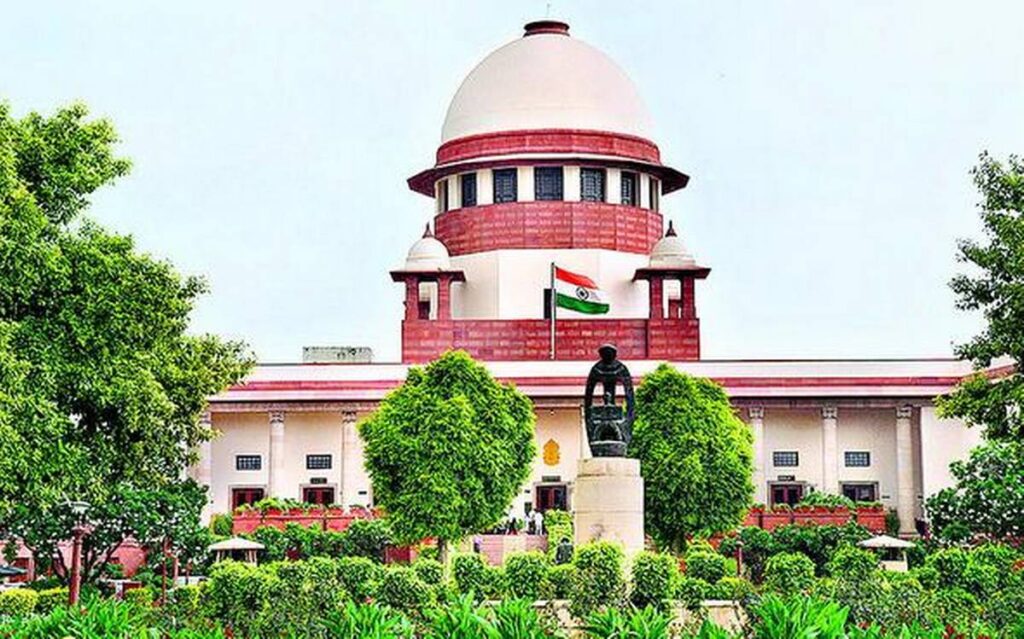
Supreme Court Bench Size Expansion: How The Ordinance Treats The Symptom Rather Than The Underlying Disease

Published On: June 18, 2026 Authored By: Sakshi Singh National Law University, Delhi Abstract The Supreme Court of India is currently facing a long-standing challenge of a growing backlog of cases, with the number recently crossing an all-time high of 93,731 pending cases. To tackle this, the executive has continuously followed a mathematics-driven approach of

Supreme Court Bench Size Expansion: How The Ordinance Treats The Symptom Rather Than The Underlying Disease Read More »

Sikkim – India’s First Fully Paperless Judiciary State

Published On: June 16th 2026 Authored By: S.S. Sakshi Asian Law College, Noida Abstract Sikkim has become India’s first fully paperless judiciary state, marking a landmark achievement in the country’s judicial modernisation. Announced by Justice Surya Kant on May 1, 2026, this transition reflects the expanding scope of the e-Courts Mission Mode Project (Phase III)

Sikkim – India’s First Fully Paperless Judiciary State Read More »

Creative AI typography art with gradient effects on a pink backdrop.

AI in the Indian Judiciary: Innovation, Efficiency, and the Question of Justice

Published On: July 13, 2026 Authored By: Siddhi Singh Introduction The Indian judiciary continues to face serious challenges such as case backlogs, procedural delays, and limited accessibility. To improve efficiency, courts have increasingly adopted Artificial Intelligence (AI) in areas like legal research, translation, case management, and virtual hearings. The Supreme Court’s initiative SUVAS (Supreme Court

AI in the Indian Judiciary: Innovation, Efficiency, and the Question of Justice Read More »

A sticky note with handwritten 'Justice' message on a white wall.

Impact of the New Criminal Laws: A Shift from the Indian Penal Code to the Bhartiya Nyaya Sanhita.

Published on: 11th June 2026 Authored by: Swapnil Raj Chanakya National Law University INTRODUCTION: For more than 160 years, the framework of the Indian criminal justice system was built around three laws introduced during the British colonial period these were the, Indian Evidence Act (“IEA”), 1874, the Indian Penal Code (“IPC”), 1860 and the Criminal

Impact of the New Criminal Laws: A Shift from the Indian Penal Code to the Bhartiya Nyaya Sanhita. Read More »

Scroll to Top