legal

justice, law, court-6570152.jpg

Case Summary: UNS Women Legal Association (Regd.) v. Bar Council of India & Ors.

Published On: January 5th 2026 Authored By: Shibrah Aftab Khan University of Kashmir Title: UNS Women Legal Association (Regd.) v. Bar Council of India & Ors. Court: Bombay High Court Bench: Division Bench (Alok Aradhe, C.J. and Sandeep Marne, J.) Date of Judgment: 07 July 2025 Introduction The judgment in UNS Women Legal Association (Regd.) […]

Case Summary: UNS Women Legal Association (Regd.) v. Bar Council of India & Ors. Read More »

Case Summary: The State v Mfalapitsa Thlomedsi Case Summary: Ephraim and Rorich Christiaan Siebert [2025] ZAGPJHC 147 (14 April 2025)

Published On: January 5th 2026 Authored By: Nolitha Mafufu University of Fort Hare 1. Case Title: The State and the Legal Resources Centre (Amicus Curiae) v Mfalapitsa Thlomedsi Ephraim and Rorich Christiaan Siebert 2. Citation: [2025] ZAGPJHC 147 (14 April 2025)¹ 3. Court: High Court of South Africa, Gauteng Local Division, Johannesburg 4. Bench:Dosio J

Case Summary: The State v Mfalapitsa Thlomedsi Case Summary: Ephraim and Rorich Christiaan Siebert [2025] ZAGPJHC 147 (14 April 2025) Read More »

Low angle view of modern skyscrapers with glass and steel design. Perfect for corporate imagery.

CORPORATE GOVERNANCE IN INDIA: A STUDY OF LEGAL FRAMEWORKS

Published On: December 16th 2025 Authored By: Tannu Mishra Gopaldas Jhamatmal Advani Law College, Mumbai ABSTRACT In India, corporate governance is more than a compliance checklist; it requires an active interplay of law, ethics, and accountability. This article examines its development from colonial statutes to contemporary reforms, with a focus on the Companies Act of

CORPORATE GOVERNANCE IN INDIA: A STUDY OF LEGAL FRAMEWORKS Read More »

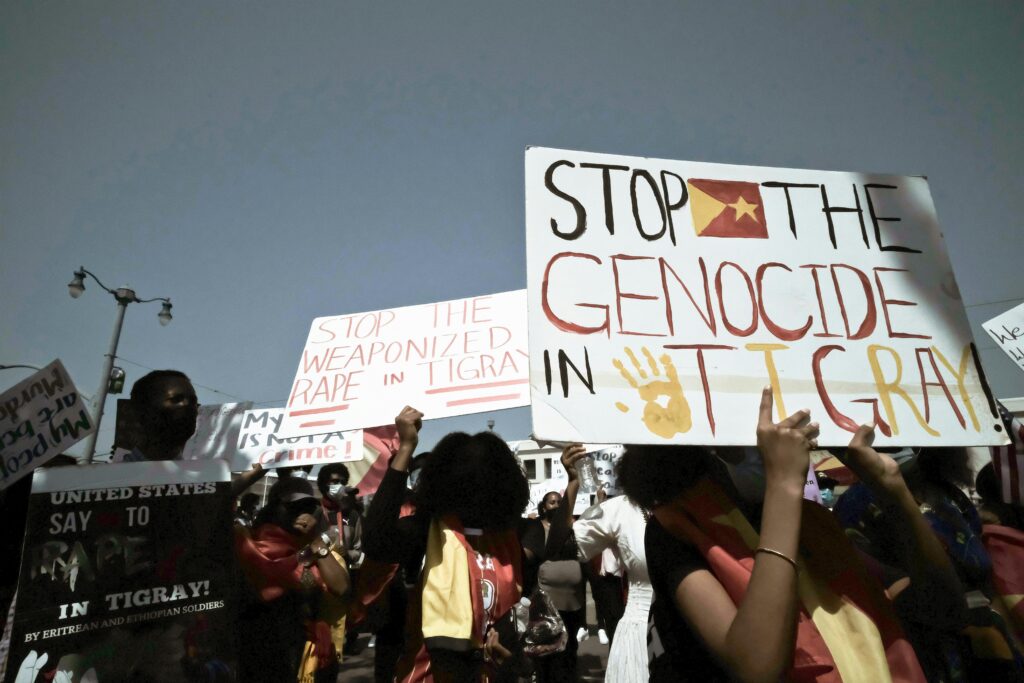
Group protest in San Francisco highlighting Tigray conflict with signs and activism.

Genocide and International Justice: Legal Accountability in Gaza, Myanmar, and Beyond

Published on: 29th November 2025 Authored By: Risuna Caswell Mabasa University of Johannesburg Introduction Genocide, widely recognized as the most egregious violation of international law, is referred to as the “crime of crimes”.[1] The ban on genocide holds fundamental importance, having both jus cogens status (peremptory norm) and establishing obligations owed erga omnes partes (to

Genocide and International Justice: Legal Accountability in Gaza, Myanmar, and Beyond Read More »

Scroll to Top