Published on: 04th March 2026
Authored by: Swarnadeep Das
Techno India University
Case Name : Supriyo @ Supriya Chakraborty v. Union of India
Citation : (2023) SCC Online SC 1348
Court : Supreme Court of India
Bench : Dr. D.Y. Chandrachud, C.J.I.; S.K. Kaul, S. Ravindra Bhat, Hima Kohli and P.S. Narasimha, JJ.
Date of Judgment : 17 October 2023
INTRODUCTION
The decision of the Supreme Court in Supriyo @ Supriya Chakraborty v. Union of India occupies an important place in contemporary constitutional discourse on individual liberty and equality. The case raised a very direct and sensitive question—whether same-sex couples have a constitutional right to marry and whether such recognition could be granted through judicial interpretation of existing statutory frameworks. While the Court ultimately declined to recognize same-sex marriage, the judgment is significant for the clarity with which it affirms the dignity, autonomy, and constitutional protection of LGBTQIA+ persons. The ruling reflects a conscious attempt by the Court to balance constitutional values with the limits of judicial intervention.
FACTS OF THE CASE
The case arose from a batch of writ petitions filed by same-sex couples seeking legal recognition of their relationships through marriage. The petitioners highlighted that the absence of marital recognition resulted in the denial of various legal and social benefits, including rights relating to inheritance, adoption, medical consent, and social security, which are otherwise available to married heterosexual couples.
The principal relief sought was an interpretation of the Special Marriage Act, 1954 (SMA) in a gender-neutral manner so as to permit marriage between persons of the same sex. The petitioners argued that the exclusion of same-sex couples from the institution of marriage violated their fundamental rights under Articles 14, 15, 19, and 21 of the Constitution of India.
The Union of India opposed the petitions, contending that marriage is a legally regulated institution shaped by legislative intent and public policy. According to the Government, any change to the existing framework of marriage laws would have wide-ranging implications and must therefore be addressed by Parliament.
ISSUES FOR CONSIDERATION
The Supreme Court examined the following issues:
- Whether the Constitution of India recognizes a fundamental right to marry.
- Whether the exclusion of same-sex couples from marriage violates Articles 14, 15, 19, and 21 of the Constitution.
- Whether the Special Marriage Act, 1954 can be interpreted to include same-sex marriages.
- Whether the Court can direct the State to grant legal recognition or civil union–like protections to same-sex couples.
ARGUMENTS ADVANCED BY THE PETITIONERS
The petitioners submitted that the right to choose a life partner and enter into a marital relationship is an essential aspect of personal liberty and dignity under Article 21. Reliance was placed on Navtej Singh Johar v. Union of India, where the Supreme Court recognized sexual orientation as an inherent facet of identity entitled to constitutional protection.
It was further argued that excluding the same-sex couples from marriage amounts to discrimination on the basis of sexual orientation, which is impermissible under Article 15. The petitioners emphasized that the Special Marriage Act is a secular statute intended to facilitate marriages outside personal laws and should therefore be interpreted purposely in a manner consistent with constitutional principles.
The doctrine of constitutional morality was also invoked, with the contention that prevailing social norms or majoritarian morality cannot justify the denial of fundamental rights.
ARGUMENTS ADVANCED BY THE RESPONDENTS
The Union of India argued that the Constitution does not confer a fundamental right to marry. Marriage, according to the Respondents, is a statutory institution whose scope and regulation fall within the legislative domain.
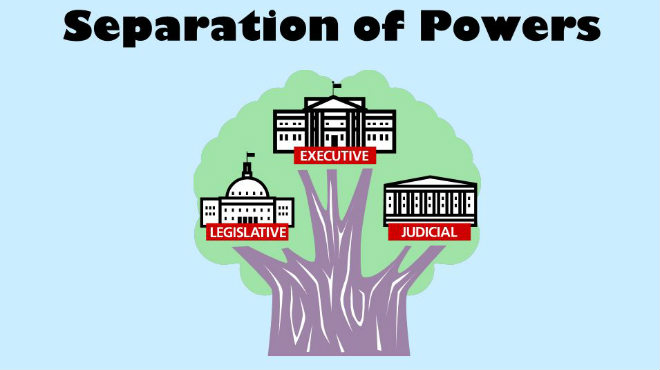
It was further contended that interpreting the Special Marriage Act to include same-sex marriages would amount to rewriting the statute, thereby violating the principle of separation of powers. The respondents also pointed out that recognition of same-sex marriage would require amendments to several allied laws relating to adoption, succession, maintenance, and inheritance, which necessitate detailed legislative deliberation.
While acknowledging the dignity and privacy of LGBTQIA+ persons, the Government maintained that the issue of marriage equality must be addressed by the Parliament rather than through judicial interpretation.
JUDGMENT AND RATIO DECIDENDI
By a 3:2 majority, the Supreme Court held that there is no fundamental right to marry under the Constitution of India. The Court declined to read same-sex marriage into the Special Marriage Act, observing that such an exercise would amount to judicial legislation.
At the same time, the Court unanimously affirmed that LGBTQIA+ persons are entitled to equal protection of the law and cannot be discriminated against on the basis of sexual orientation. The majority recognised that the Constitution protects the right to choose one’s partner, cohabit, and form intimate relationships, even if it does not extend to formal recognition through marriage.
The ratio decidendi of the judgment lies in the distinction drawn between individual liberty and institutional recognition. While personal autonomy and dignity are constitutionally protected, the legal recognition of marriage was held to require legislative action.
CRITICAL ANALYSIS
The judgment reflects a restrained and institutionally conscious approach adopted by the Supreme Court while addressing a complex and evolving social issue. The Court reaffirmed the constitutional protection available to sexual minorities but consciously avoided extending marital rights through judicial interpretation.
From a critical perspective, the refusal to interpret the Special Marriage Act in a gender-neutral manner may be viewed as a missed opportunity to advance substantive equality. In earlier decisions such as Navtej Singh Johar and Joseph Shine v. Union of India, the Court adopted a more transformative interpretative approach. A similar method could arguably have been applied in the present case.
At the same time, the judgment is significant for its clear recognition of queer relationships as constitutionally protected. The opinions make it evident that denial of marriage does not amount to denial of dignity and that the State bears a positive obligation to ensure that LGBTQIA+ persons are not excluded from social and legal protections.
The decision also brings into focus the structural limits of judicial intervention in matters requiring broad socio-legal reform. By deferring the issue to the legislature, the Court respected democratic processes while leaving open the possibility of future legal developments.
CONCLUSION
Supriyo @ Supriya Chakraborty v. Union of India stands as an important constitutional decision that balances progressive constitutional values with judicial restraint. Although the judgment does not recognize marriage equality, it strengthens the constitutional foundation of LGBTQIA+ rights in India. The ruling is likely to influence future legislative debates and judicial reasoning on questions of equality, dignity, and personal liberty, marking a gradual but meaningful step in India’s constitutional evolution.