Published on: 4th June 2026
Authored by: Yash Todi
Bennett University
Abstract
The proliferation of digital platforms has fundamentally reshaped human interaction, creating a virtual landscape where psychological injuries can be inflicted with unprecedented speed and scale. While the digital revolution has enhanced connectivity, it has simultaneously given rise to cyberbullying, trolling, cancel culture, and doxxing, resulting in severe emotional distress and reputational trauma. Despite the growing prevalence of such harm, Indian tort law remains archaic, predominantly centred on physical injury or property damage, with only a tenuous recognition of standalone mental injury. This paper addresses the critical gap in civil remedies for victims of digital emotional abuse. It argues that the current legal framework, which relies heavily on criminal statutes and traditional defamation, is insufficient to compensate for the intangible yet debilitating psychological harm prevalent in the digital era. By conducting a comparative analysis with US and UK jurisprudence and examining the constitutional dimensions of the right to privacy and dignity, this paper explores the necessity of recognising ‘psychological torts’ in India. It concludes by proposing a doctrinal framework to integrate emotional distress into the tort law landscape, ensuring the legal system evolves to meet the complexities of a digital society.
Keywords
Psychological Harm, Tort Law, Emotional Distress, Cyberbullying, Privacy, Digital Harm, Indian Law, Civil Liability
Introduction
The advent of the digital age has fundamentally altered the fabric of human discourse, moving interactions from physical spaces to virtual platforms. While this transition has democratised information, it has also engendered a dark underbelly of non-physical violence. In the contemporary era, harm is no longer confined to bodily injury or trespass to property; it permeates the psychological sphere, manifesting as anxiety, depression, and trauma induced by online interactions. The rise of social media has amplified the scale of emotional harm, turning localised bullying into global phenomena.
Traditional tort law in India, however, remains tethered to a 19th-century paradigm that prioritises physical and economic harms over intangible injuries. As noted by Winfield and Jolowicz, the historical development of tort law has been heavily skewed towards the protection of property and physical safety, often leaving mental harm to the periphery.[1] The existing framework is predicated on the Latin maxim damnum sine injuria and injuria sine damnum, often failing to recognise pure mental anguish absent physical impact. This creates a significant vacuum where victims of severe digital harassment – such as doxxing, coordinated trolling, or non-consensual sharing of intimate images – are left without adequate civil remedies.
This paper defines ‘psychological torts’ as civil wrongs that cause significant mental or emotional distress, distinct from physical harm or mere injury to reputation. The core thesis of this research is that Indian tort law must evolve to recognise these standalone psychological injuries. As society transitions into a digital-first reality, the law must shed its physicality bias and acknowledge that emotional scars can be as debilitating as physical ones. Through a comparative analysis and a critique of current judicial trends, this paper argues for the recognition of a tort of intentional infliction of emotional distress adapted to the Indian context.
Understanding Emotional Harm in the Digital Context
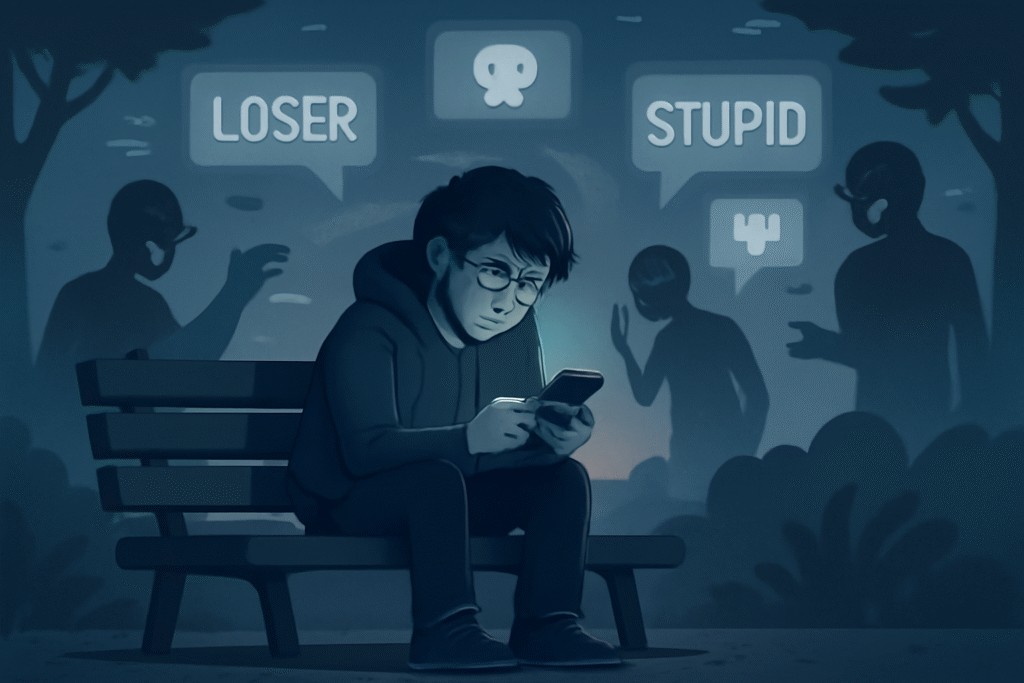
- Nature of Digital Harm: Digital emotional harm differs qualitatively from traditional harassment. Cyberbullying involves repeated hostile behaviour intended to harm others, often characterised by power imbalances. Trolling, a broader term, encompasses posting inflammatory or off-topic messages to provoke upset. More severe manifestations include ‘cancel culture’, where coordinated mass shaming leads to social ostracisation, and ‘doxxing’ – the public release of private, identifying information with malicious intent. These actions are not merely offensive; they constitute targeted attacks on an individual’s mental peace and security. The National Crime Records Bureau (NCRB) data in India has shown a consistent rise in cybercrimes, indicating a growing trend of online abuse that transcends geographical boundaries.[2]
- Characteristics of Digital Emotional Harm: The distinct feature of digital harm is its permanence and amplification. Unlike a spoken insult that fades, a defamatory post or a leaked image can remain accessible indefinitely, searchable by employers, family, and peers. The anonymity afforded to perpetrators often disinhibits aggression, leading to more extreme conduct than would occur face-to-face. Furthermore, the ‘viral’ nature of digital content means that harm is not limited to the immediate victim but extends to their social circle, multiplying the psychological impact through scale and speed.
- Real-world Implications: The consequences of such digital trauma are profound. Victims frequently suffer from anxiety, depression, and post-traumatic stress disorder (PTSD). There are tangible social and economic repercussions, including loss of employment, social withdrawal, and in tragic cases, self-harm. The law’s failure to provide a civil avenue for redress exacerbates this victimisation, leaving individuals with little recourse beyond criminal complaints, which are often slow and do not compensate the victim.
Current Position of Indian Tort Law
- Traditional Scope of Torts: Indian tort law is largely uncodified, borrowing heavily from English common law. Its traditional scope is dominated by negligence, defamation, nuisance, and trespass. In these areas, the plaintiff must generally prove a ‘recognisable legal injury’. The courts have historically been hesitant to award damages for mental suffering unless it is consequent upon a physical injury or a breach of a contractual duty.[3]
- Limited Recognition of Mental Harm: Judicial recognition of mental harm is sporadic and restrictive. In cases of negligence, Indian courts have followed the English rule in McLoughlin v O’Brian[4], requiring that psychiatric injury must be a foreseeable consequence of a physical shock. However, in exceptional circumstances involving fundamental rights, the courts have recognised mental agony. For instance, in State of Bihar v. Ramesh Singh, the Supreme Court acknowledged mental agony caused by illegal detention but compensated it as part of a violation of fundamental rights rather than a standalone tort of negligence.[5] Similarly, in cases involving medical negligence, such as Spring Meadows Hospital v. Harjol Ahluwalia, the Supreme Court awarded damages for mental shock and suffering, but these are often treated as ancillary to the physical negligence or breach of contract.[6]
- Gaps in Legal Remedies: There is currently no standalone tort for ‘intentional infliction of emotional distress’ in India. Victims of online harassment must rely on criminal provisions under the Indian Penal Code, 1860 (IPC) (e.g., Sections 507 for criminal intimidation by anonymous communication) or the Information Technology Act, 2000 (e.g., Section 67 for publishing obscene material). Section 66E of the IT Act addresses privacy violations by capturing or publishing images, but the remedy is primarily criminal prosecution. While these provisions punish the offender, they do not provide monetary compensation to the victim for their suffering. Furthermore, defamation only covers harm to reputation, leaving the victim of purely emotional trauma (e.g., threats, harassment that does not lower reputation) without a civil remedy.
Comparative Jurisprudence
- United States Approach: The United States has made significant strides in recognising psychological torts, most notably through the tort of Intentional Infliction of Emotional Distress (IIED). Established in the Restatement (Second) of Torts § 46, IIED allows plaintiffs to recover damages if the defendant’s conduct was (i) extreme and outrageous, (ii) done intentionally or recklessly, and (iii) caused (iv) severe emotional distress.[7] This doctrine has been applied successfully in cases of harassment and blackmail, providing a robust civil remedy for non-physical harm. The Supreme Court of the United States has also acknowledged that the First Amendment does not protect outrageous conduct directed at private individuals, balancing free speech with protection from severe emotional harm.[8]
- United Kingdom Approach: The UK has been more cautious, traditionally adhering to the ‘egg-shell skull’ rule but generally barring claims for mere grief or fright unless accompanied by physical injury (nervous shock). However, recent jurisprudence has shown a gradual relaxation. The landmark case of Wilkinson v Downton established the tort of intentional infliction of harm where a defendant plays a practical joke on the plaintiff, causing her physical shock and nervousness.[9] This principle has been expanded in modern contexts, though courts remain wary of flooding the legal system with trivial claims.
- Lessons for India: India can draw valuable lessons from both jurisdictions. The US model offers a comprehensive solution by recognising the tortious nature of extreme conduct regardless of physical injury. The UK approach, conversely, provides a necessary check by requiring medical evidence of psychiatric injury to prevent frivolous claims. For India, a hybrid approach – recognising intentional infliction of emotional distress as a tort while maintaining a high threshold for ‘severity’ akin to the UK’s reasonable foreseeability test – would be most appropriate.
Constitutional Dimension
The recognition of psychological torts in India is not merely a matter of common law evolution but a constitutional imperative. Article 21 of the Constitution guarantees the right to life and personal liberty. The Supreme Court has expansively interpreted this right to include the right to live with human dignity, health, and mental peace.[10] In Bandhua Mukti Morcha v. Union of India, the Court held that the right to life includes the right to live with dignity, which encompasses the mental and physical health of workers.[11]
In Justice K.S. Puttaswamy (Retd.) v Union of India, the Court recognised the right to privacy as a fundamental right, encompassing the right to be left alone and the protection of one’s informational privacy.[12] Unauthorised digital intrusion and harassment constitute a direct violation of this privacy. Furthermore, the Court has held in Common Cause v. Union of India that the right to life includes the right to die with dignity, implicitly recognising the importance of mental well-being and the avoidance of pain.[13] If the state has a duty to protect mental health, it follows that civil law must provide remedies against private actors who destroy it through digital abuse.
Need for Recognizing Psychological Torts
- Changing Nature of Harm: The distinction between physical and mental harm is becoming increasingly blurred. Psychological trauma can manifest physically (psychosomatic illness) and can be just as disabling. The law’s stubborn adherence to the physicality rule is archaic in a society where primary interactions occur online.
- Inadequacy of Existing Remedies: Criminal law is designed to punish, not to compensate. A victim of severe trolling does not merely want the perpetrator jailed; they want vindication and reparations for the trauma endured. Defamation is too narrow, as it requires proof of harm to reputation in the eyes of third parties, whereas emotional harm is subjective and internal. Privacy laws, while useful, are often reactive rather than proactive. The current reliance on criminal statutes like the IT Act fails to address the civil wrong aspect of emotional injury.[14]
- Justice & Accountability: Recognising psychological torts would shift the burden of harm onto the perpetrator. It would serve as a deterrent against online abuse and force digital platforms to take greater accountability for the environment they foster. Without civil liability, there is little financial incentive for platforms or trolls to moderate behaviour. As argued by scholars of cyber-psychology, the lack of consequences in the digital realm often fuels the ‘online disinhibition effect’, which must be countered by strict civil liability.[15]
Challenges and Concerns
- Proof of Emotional Harm: The primary challenge is evidentiary. Emotional distress is inherently subjective. Courts will need to rely on medical/psychological evidence to distinguish genuine psychiatric injury from transient anger or annoyance. This necessitates a judicial understanding of mental health diagnostics and a shift away from treating emotional distress as ‘unprovable’.
- Risk of Frivolous Litigation: There is a genuine concern that recognising psychological torts could flood the courts with claims for hurt feelings or minor insults. This can be mitigated by setting a high threshold for liability, requiring proof of ‘severe’ distress rather than mere ‘offence’, as seen in the US jurisprudence where the conduct must be “extreme and outrageous”.[16]
- Free Speech Concerns: Any restriction on online behaviour must be balanced against the freedom of speech under Article 19(1)(a). In Shreya Singhal v. Union of India, the Supreme Court struck down Section 66A of the IT Act as unconstitutional, emphasising the importance of free speech on the internet.[17] The law must carefully define what constitutes ‘outrageous conduct’ to ensure it does not stifle legitimate criticism, satire, or robust political debate.
- Enforcement Issues: The anonymity of the internet makes identifying perpetrators difficult. Moreover, the cross-border nature of the web raises jurisdictional hurdles. Effective implementation would require cooperation from intermediaries and international frameworks to ensure that judgments can be enforced against perpetrators operating from different jurisdictions.
- Proposed Legal Framework
- Recognition of a New Tort: Indian law should recognise a new tort of Intentional Infliction of Emotional Distress (IIED). This tort should apply to conduct that occurs both offline and online. A ‘psychological tort’ can be defined as: An actionable wrong where a person intentionally or recklessly engages in conduct that causes severe emotional or mental harm to another. This draws upon the rationale in Rylands v Fletcher, where a new rule was formulated to address changing industrial risks; similarly, a new rule is needed for digital risks.[18]
Essential Elements:
To establish this tort, the plaintiff must prove:
- Conduct: The defendant’s conduct was extreme and outrageous, transcending the bounds of decency tolerated in a civilised community (e.g., sustained cyberbullying, targeted hate speech, doxxing).
- Intent/Recklessness: The defendant acted with the intent to cause distress or with reckless disregard for the high probability that distress would result.
- Causation: The conduct was the actual and proximate cause of the distress.
- Damages: The plaintiff suffered severe emotional distress (evidenced by medical testimony or substantial disruption of daily life).
- Standards of Liability: The threshold for ‘severity’ must be high to avoid frivolous litigation. Mere embarrassment, annoyance, or hurt feelings should not suffice. The distress must be such that a reasonable person would be unable to cope. However, if the defendant knows of the plaintiff’s particular susceptibility (e.g., a pre-existing mental health condition), they ‘take the plaintiff as they find them’ (the Egg-shell Skull rule). This principle, well established in negligence law (see Smith v Leech Brain & Co [19]), should be extended to psychological torts.
Remedies
- Monetary Compensation: Damages for emotional trauma, loss of enjoyment of life, and medical expenses.
- Injunctions: Courts should grant mandatory injunctions requiring the removal of content and restraining orders against the perpetrator, as provided for under Section 94 of the Code of Civil Procedure, 1908.
- Platform Liability: Safe harbour provisions under Section 79 of the IT Act should be refined to hold platforms accountable if they fail to act upon notice of such outrageous conduct.
- Role of Courts & Legislature: While judicial activism can bridge the gap initially, legislative intervention is ultimately required to codify the elements of this tort and provide clear guidelines for the judiciary, ensuring uniformity in application.
Way Forward
The evolution of tort law must mirror the evolution of society. Indian courts should begin by acknowledging the right to mental peace as a distinct legal interest, drawing upon Article 21. Judicial precedents in the realm of consumer protection and environmental law have already shown a willingness to award damages for mental harassment and anguish.[20]
Legislators must consider amending the IT Act or introducing specific civil remedies for digital harm. An interdisciplinary approach is essential; legal education must incorporate principles of psychology to better equip judges to assess emotional harm. Finally, institutional mechanisms, such as dedicated cyber tribunals with fast-track procedures established under the IT Act, must be strengthened to handle these cases efficiently, ensuring that justice is not delayed.
Conclusion
The digital age has unleashed new forms of violence that target the human psyche rather than the body. Emotional harm, characterised by its permanence, anonymity, and scale, is a pressing social reality. However, Indian tort law remains in a state of denial, clinging to a physicality bias that leaves victims of digital abuse without recourse.
This paper has argued that the recognition of ‘psychological torts’ is not only necessary but overdue. By adopting a framework similar to the US tort of IIED, tempered with the safeguards of the UK approach, India can bridge the doctrinal gap. Such a reform would align civil law with the constitutional guarantees of dignity and privacy under Article 21. Recognizing psychological torts is not just a legal technicality; it is a decisive step toward a human-centric justice system that values mental well-being as much as physical safety in the digital era.
References
[1] William V.H. Rogers, Winfield and Jolowicz on Tort (18th edn, Sweet & Maxwell 2010) ch 1.
[2] National Crime Records Bureau, Crime in India 2022 (Ministry of Home Affairs 2023) Vol III.
[3] Ratanlal & Dhirajlal, The Law of Torts (26th edn, LexisNexis 2019) 3.
[4] McLoughlin v O’Brian [1983] 1 AC 410 (HL).
[5] State of Bihar v. Ramesh Singh AIR 1961 SC 708.
[6] Spring Meadows Hospital v. Harjol Ahluwalia (1998) 4 SCC 39.
[7] Restatement (Second) of Torts § 46 (1965).
[8] Snyder v. Phelps 562 US 443 (2011).
[9] Wilkinson v Downton [1897] 2 QB 57.
[10] Maneka Gandhi v. Union of India (1978) 1 SCC 248.
[11] Bandhua Mukti Morcha v. Union of India (1984) 3 SCC 161.
[12] Justice K.S. Puttaswamy (Retd.) v Union of India (2017) 10 SCC 1.
[13] Common Cause v. Union of India (2018) 5 SCC 1.
[14] Information Technology Act 2000 (India).
[15] John Suler, ‘The Online Disinhibition Effect’ (2004) 7 Cyber Psychology & Behaviour 321.
[16] Restatement (Second) of Torts § 46, Comment d.
[17] Shreya Singhal v. Union of India (2015) 5 SCC 1.
[18] Rylands v Fletcher (1868) LR 3 HL 330.
[19] Smith v Leech Brain & Co [1962] 2 QB 405.
[20] Dr. Batra Law Institute v. Kuldip Singh (2010) 15 SCC 413.