Constitution

Creative AI typography art with gradient effects on a pink backdrop.

GENERATIVE AI AND THE MODICUM OF CREATIVITY: EVALUATING ART CREATION AND COPYRIGHT ELIGIBILITY

Published on: 26th July 2026 Authored by: Aahana Bhavsar JGLS, Sonipat ABSTRACT The evolving paradigm of Generative Artificial Intelligence (GAI) has ignited a profound global discourse regarding copyright eligibility, fundamentally challenging the long-held requirement of human authorship.[1] This paper critically examines the threshold of originality—the “minimum modicum of creativity” as interpreted and applied under United […]

GENERATIVE AI AND THE MODICUM OF CREATIVITY: EVALUATING ART CREATION AND COPYRIGHT ELIGIBILITY Read More »

globe, map, world map, globe, globe, globe, map, map, world map, world map, world map, world map, world map

TUVALU NEEDS ASYLUM, BUT TO WHAT EXTENT?

Published on: 24th July 2026 Authored by: Ridhima Singh University of Allahabad I. Introduction Climate change poses an existential crisis to vulnerable island nations across the globe. Lower-income and geographically exposed states, which contribute minimally to global greenhouse gas emissions, bear a disproportionate burden of environmental degradation. A critical legal and human rights challenge arising

TUVALU NEEDS ASYLUM, BUT TO WHAT EXTENT? Read More »

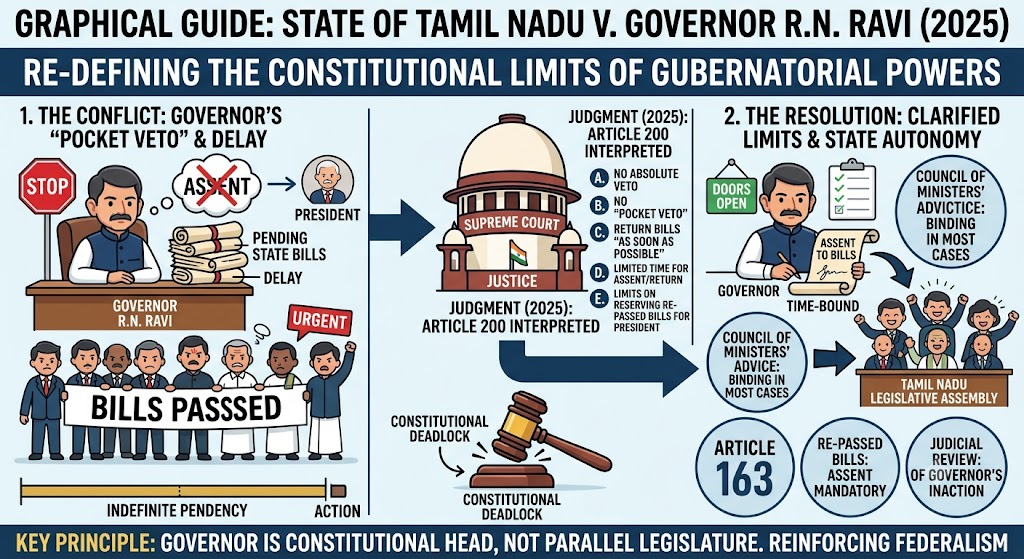
STATE OF TAMIL NADU V. GOVERNOR R.N. RAVI (2025): RE-DEFINING THE CONSTITUTIONAL LIMITS OF GUBERNATORIAL POWERS

Published On: July 23rd 2026 Authored By: Subhiksha M Sathyabama Institute of Science and Technology, Chennai Introduction The office of the Governor occupies a distinctive position within the constitutional framework of India. Although the Governor serves as the constitutional head of a State, the real executive power rests with the elected Council of Ministers. In

STATE OF TAMIL NADU V. GOVERNOR R.N. RAVI (2025): RE-DEFINING THE CONSTITUTIONAL LIMITS OF GUBERNATORIAL POWERS Read More »

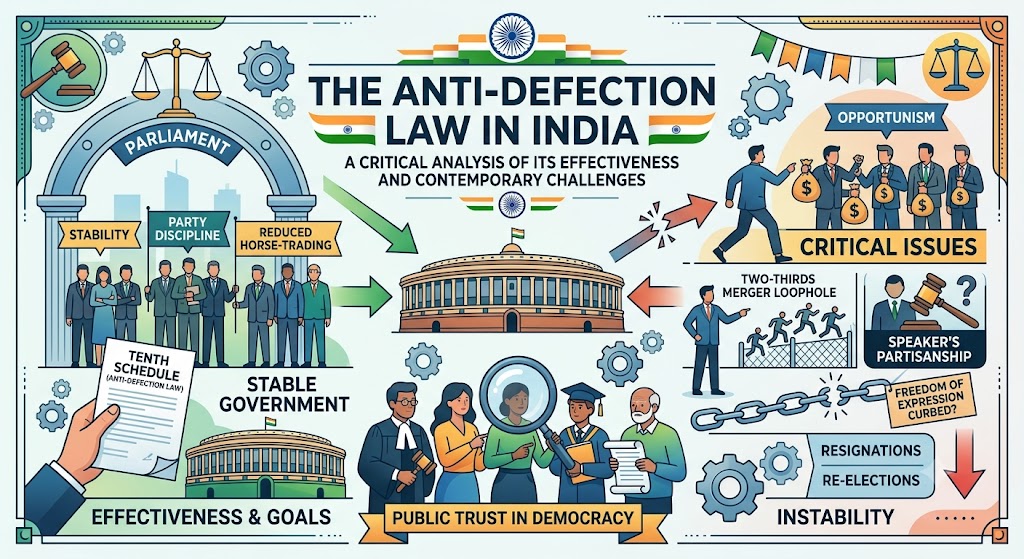
The Anti-Defection Law in India – A Critical Analysis of Its Effectiveness and Contemporary Challenges

Published On: July 23rd 2026 Authored By: Suchit Rajendra Salve Modern Law College, Pune I. Abstract  The Anti-Defection Law in India, included through the Tenth Schedule of the Constitution, was introduced to address the growing problem of political defections that put governmental stability in danger and weakened democratic values. Political defection means where the members

The Anti-Defection Law in India – A Critical Analysis of Its Effectiveness and Contemporary Challenges Read More »

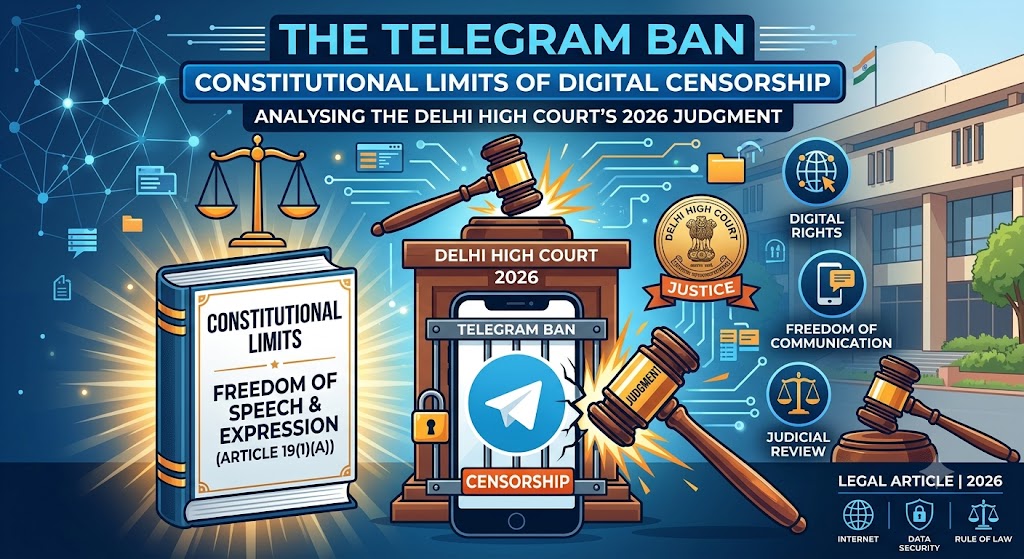
The Telegram Ban and the Constitutional Limits of Digital Censorship: Analysing the Delhi High Court’s 2026 Judgment

Published On: July 22nd 2026 Authored By: Navyaa Yadav Rajiv Gandhi National University of Law, Punjab I. Introduction Communication has been digitised so quickly that Internet platforms have become essential spaces for expression, association, education and commerce. Messaging applications are not just for private and individual communication anymore but have become digital public spaces for

The Telegram Ban and the Constitutional Limits of Digital Censorship: Analysing the Delhi High Court’s 2026 Judgment Read More »

Scroll to Top