Constitution

Wooden stamps spelling 'ORIGINAL' on textured paper, minimalistic design.

Comparative Analysis of Trademark Protection in India, the US, and the European Union

Published on: 19th April 2026 Authored by: Rimjhim Pandey VSSD PG College Kanpur ABSTRACT  Trademarks are an important component of intellectual property law which plays a crucial role in distinguishing the goods and services of one distinct enterprise to another distinct enterprise. In the increasingly globalized market business often operate across multiple jurisdictions making it […]

Comparative Analysis of Trademark Protection in India, the US, and the European Union Read More »

A dimly lit table with a reserved sign, set in an outdoor environment creating a moody atmosphere.

Case Summary: State of Punjab v. Davinder Singh (2024) 9 SCC 1

Published On: 19th April, 2026 Authored By: Aditi Mukherjee Manikchand Pahade Law College Case Name: State of Punjab v. Davinder SinghCourt: Supreme Court of IndiaBench: Seven‑Judge Constitution Bench, led by Chief Justice of India D.Y. ChandrachudDate of Judgment: 1 August 2024Relevant Statutes / Key Provisions:Article 14, Constitution of India: Guarantees the right to equality before

Case Summary: State of Punjab v. Davinder Singh (2024) 9 SCC 1 Read More »

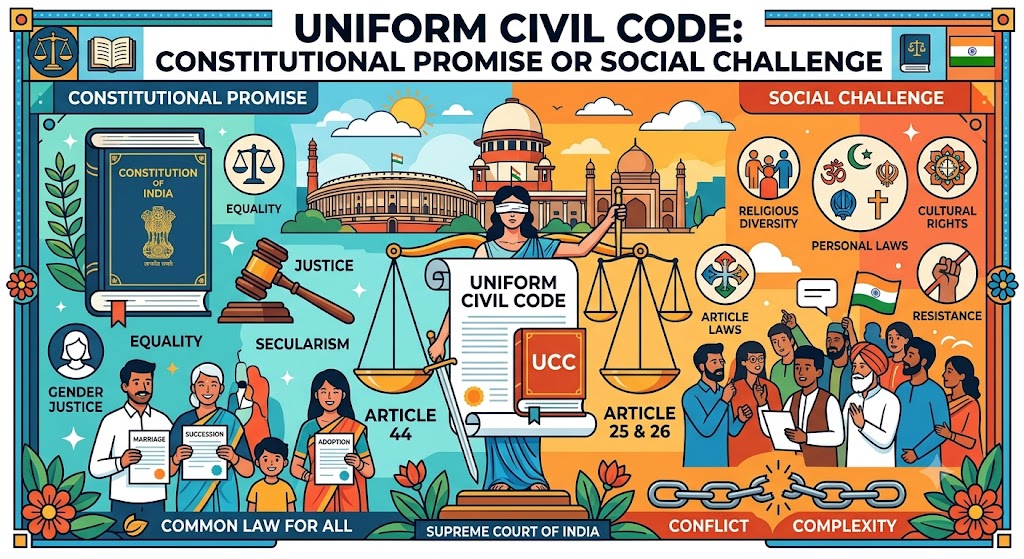
Uniform Civil Code: Comparative Analysis of India and Foreign Jurisdictions

Published On: April 18th 2026 Authored By: Trisha Goyal O. P. Jindal Global University Abstract The Uniform Civil Code (UCC) remains one of the most contested constitutional directives in India. Enshrined in Article 44 of the Directive Principles of State Policy,[1] the UCC envisages a common set of civil laws governing marriage, divorce, adoption, and

Uniform Civil Code: Comparative Analysis of India and Foreign Jurisdictions Read More »

Judicial Review under Article 13 of the Constitution of India: Scope, Evolution and Constitutional Challenges

Published On: April 18th 2026 Authored By: Sonam Tiwari Amity University Raipur Chhatisgarh Abstract Judicial review is a foundational aspect of constitutional governance in India. It empowers the judiciary to examine legislative and executive actions for conformity with the Constitution. Article 13 of the Constitution of India establishes this power by declaring that laws inconsistent

Judicial Review under Article 13 of the Constitution of India: Scope, Evolution and Constitutional Challenges Read More »

Scroll to Top