Published On: 27th September 2026
Authored By: Sudiksha Mathur
Insitute of Law, Nirma University
ABSTRACT
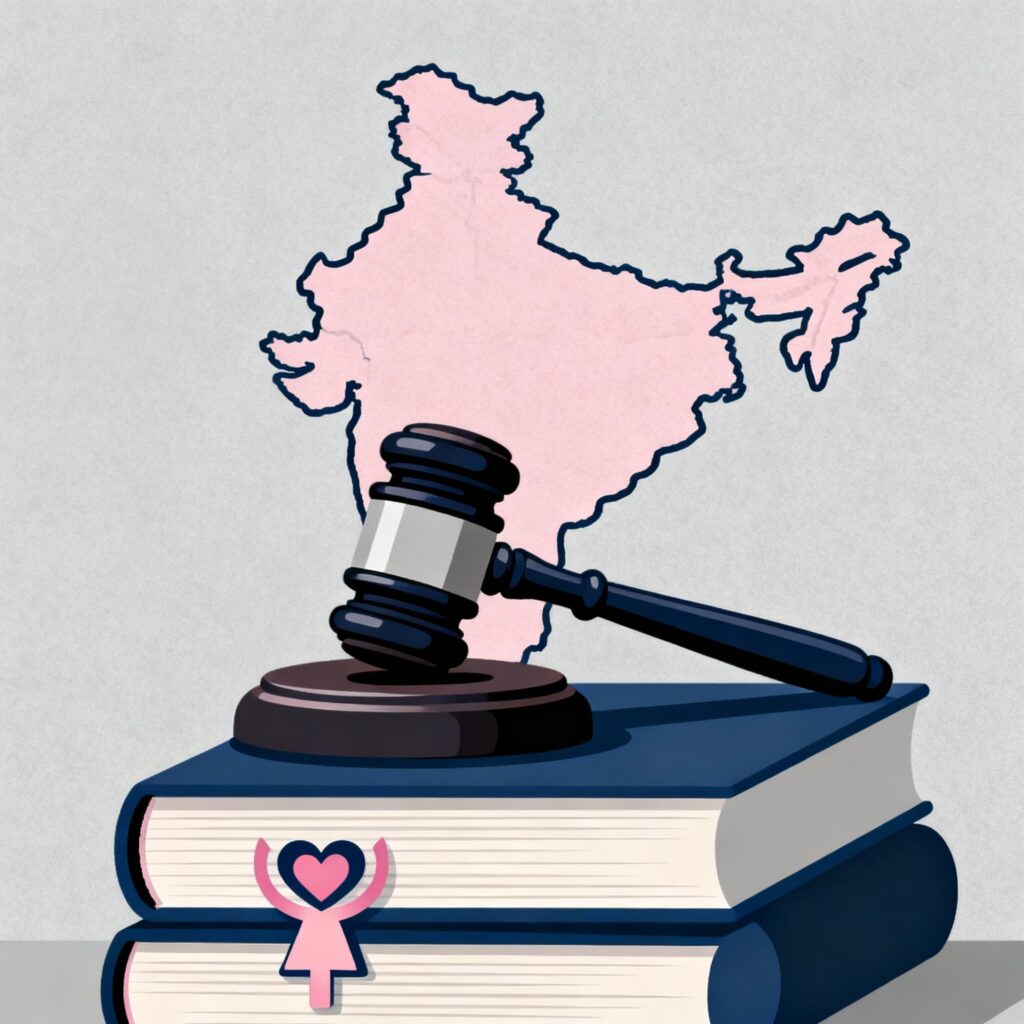
Menstruation is a natural biological process that has far reaching social and institutional consequences for the dignity, equality and educational opportunities for millions of girls and women. Inadequate access to menstrual products, functional sanitation facilities, clean water, privacy and safe disposal mechanisms can transform an ordinary biological process into an extraordinary barrier in life. The Constitutional significance of these barriers was recently examined by the Supreme Court of India in Dr. Jaya Thakur v. Government of India & Ors.[1], where the Court recognised dignified menstrual health as an integral component of the right to life under Article 21 of the Constitution. The Court further linked menstrual hygiene with substantive equality under Article 14 and meaningful access to education under Article 21A. This article examines the constitutional basis of the right to menstrual health and explores the significance of Dr. Jaya Thakur v. Government of India & Ors., in shifting menstrual hygiene from being viewed merely as a welfare concern to a matter of constitutional importance. It argues that constitutional recognition must be supported by accessible facilities, affordable menstrual products, proper awareness, and most importantly, the right to menstruate with dignity.
INTRODUCTION
Some issues are discussed openly, while others remain confined to silence. Menstruation has for generations, belonged largely to the latter category. What should be a normal biological process can become difficult when a person does not have access to safe menstrual products, clean water, proper sanitation or privacy. These challenges are particularly significant in schools where inadequate facilities may affect a girl’s ability to attend classes and participate freely in everyday activities.
For a long time, menstrual hygiene was largely addressed through the lens of health, sanitation or welfare. Its connection with constitutional rights raises a deeper question- can the right to life, equality and education be meaningfully enjoyed when basic menstrual needs remain unmet? That question became impossible to ignore after the Supreme Court’s ruling in Dr. Jaya Thakur v. Government of India & Ors. The judgment doesn’t just treat menstrual health as a matter of personal hygiene anymore; it ties it directly to constitutional rights and to dignity itself.
MENSTRUAL HEALTH AND THE CONSTITUTIONAL RIGHT TO LIFE
Article 21[2] guarantees the right to life and personal liberty. The provision, however, has never been confined to mere physical existence. Over decades of interpretation, it’s become settled that the right to life includes the right to live with dignity. That matters a lot here. Availability of sanitary products, clean water, functional toilets and privacy may sound like basic necessities but their unavailability directly affects a person’s health and dignity. No one should have to give up their bodily privacy or be barred from everyday spaces just because she can’t safely manage menstruation.
The connection between menstrual health and dignity also becomes clearer through the constitutional protection of privacy and bodily autonomy. In Justice K.S. Puttaswamy (Retd.) & Anr. v. Union of India & Ors. [3], the Supreme Court recognised privacy as a fundamental right and emphasised the importance of dignity and decisional autonomy. Menstruation is inherently connected with the body and the ability to manage it privately and safely forms part of an individual’s bodily autonomy.
The Supreme Court’s reasoning in Jaya Thakur builds upon the understanding of Article 21. The Court expressly recognised the right to menstrual health as a part of right to life and connected access to menstrual hygiene and management with dignity.
When the absence of basic facilities affects a person’s health, privacy or ability to participate in everyday life, it becomes a matter of constitutional concern.
MENSTRUAL HEALTH AND SUBSTANTIVE EQUALITY UNDER ARTICLE 14
Article 14[4], guarantees equality before the law and equal protection of the laws. However, equality does not always mean treating everyone the same. Where individuals face different structural barriers, treating everyone in exact same manner may itself produce unequal outcomes. Menstruation presents a clear example. A school may provide the same classrooms, teachers and curriculum to all students but if girls do not have access to basic functional toilets and menstrual products, their ability to participate in that same educational environment may be hindered. This is where the principle of substantive equality becomes important. The objective of equality is not merely to remove explicit discrimination but also to address conditions that place certain groups at a disadvantage. The Supreme Court recognised this principle in Dr. Jaya Thakur v. Government of India & Ors., observing that the lack of menstrual hygiene management measures can function as a structural barrier to equal participation in education. Providing menstrual products or appropriate sanitation facilities should not be viewed as preferential treatment. Such measures help to remove the disadvantages that would otherwise prevent girls from participating on equal terms like their peers. A girl may have the formal right to attend school but that right becomes less meaningful if she is unable to attend safely and comfortably during menstruation. Equality requires more than opening the school gates, it requires creating conditions in which students can actually participate.
DR JAYA THAKUR V GOVERNMENT OF INDIA: FROM WELFARE TO RIGHTS
The decision in Dr. Jaya Thakur v. Government of India & Ors., Writ Petition (Civil) No 1000 of 2022, decided on 30 January 2026, represents a significant development in the constitutional treatment of menstrual health. The petition sought directions relating to free sanitary pads, separate functional toilets for girls and menstrual health awareness in schools.
The Court examined menstrual hygiene as part of the fundamental rights. The Court held that the right to menstrual health forms part of the right to life under Article 21. It also connected menstrual hygiene with the right to equality under Article 14 and the fundamental right to education under Article 21A. The Court recognised that the absence of menstrual hygiene facilities can affect not only health but also dignity, participation and equality of opportunity. The Court also emphasised awareness and training, including gender responsive educational content and sensitisation of teachers and school management.
The judgment therefore moves beyond the simple question of providing sanitary napkins. It recognises menstrual health as part of a larger constitutional framework in which dignity, equality, health and education are interconnected.
THE IMPLEMENTATION GAP: IS RECOGNITION ENOUGH?
Constitutional recognition is the most important first step but it cannot in itself solve the practical difficulties surrounding menstrual health.
The Court itself recognised that merely declaring menstrual hygiene to be a fundamental right would be insufficient. In the subsequent proceedings, the Court emphasised that the Union and State Governments should collaborate in directed monitoring.
This is where implementation becomes central to the right recognised in the case- Dr. Jaya Thakur v. Government of India & Ors.
The problem is therefore not limited to infrastructure. It is also social. Menstruation continues to be associated with myths, superstitions, discomfort and silence. A student may have access to a sanitary product but still hesitate to ask for one because she feels uncomfortable.Menstrual health cannot be secured only through physical infrastructure, it also requires an environment in which menstruation can be discussed without shame.
THE WAY FORWARD: MAKING MENSTRUAL DIGNITY A REALITY
The recognition of menstrual health as a fundamental right places a positive responsibility on the State to ensure that the right is capable of being exercised in practice. The way forward-
- Menstrual hygiene facilities should be treated as an essential part of school infrastructure. Functional toilets, clean water, sanitary products and safe disposal mechanisms must operate together.
- Access must be regular and affordable.
- Implementation requires monitoring. Schools and authorities should be held accountable for maintaining sanitation facilities and ensure that menstrual hygiene measures remain functional.
- Awareness must be treated as part of menstrual health rather than as an optional addition. Teachers should provide accurate information about menstruation so that misconceptions and stigma can gradually be reduced.
- The focus should remain on dignity. The objective is to ensure that menstruation does not become a reason for exclusion, embarrassment or loss of educational or similar opportunity
CONCLUSION
The recognition of menstrual health as a fundamental right marks an important development in India. Through Dr. Jaya Thakur v. Government of India & Ors., the Supreme Court has brought menstrual health within the constitutional framework of dignity, equality, health and education.
The significance of the judgement lies in recognising that a natural biological process should not become a barrier to the enjoyment of fundamental rights. At the same time, constitutional recognition cannot remain limited to the pages of a judgment. A right becomes meaningful only when it is exercised in everyday life. The success of the judgement will therefore depend on whether its directions are implemented effectively and also whether the stigma related to menstruation ends.
A girl should not have to miss school because she does not have access to a sanitary product. She should not have to compromise her privacy because her school lacks clean water or a functional toilet. Most importantly, she should not have to feel ashamed of a natural biological process.
Menstrual health is therefore not a matter of charity, convenience or privilege. It is closely connected with the ability to live with dignity, participate equally and access education properly. The Supreme Court has taken an important constitutional step by recognising that connection. The responsibility now is to ensure that the right to menstrual dignity does not remain a principle on paper, but becomes a reality in the everyday lives of those who menstruate.
REFERENCES
[1] Dr. Jaya Thakur v. Government of India & Ors., W.P. (C) No. 1000 of 2022, 2026 INSC 97 (Supreme Court of India, Jan. 30, 2026).
[2] Constitution of India article 21.
[3] Justice K.S. Puttaswamy (Retd.) & Anr. v. Union of India & Ors., (2017) 10 SCC 1.
[4] Constitution of India article 14.